Tattoo Guide/hidden tattoo placements
Which tattoo placements are easy to hide?
You want a tattoo, but your life makes it complicated. Strict parents, regular sports with shared locker rooms, a religious family, a uniformed job, or simply the wish to keep it to yourself. The good news: there are at least 5 zones on the body where a tattoo stays invisible **even in a swimsuit** or **in athletic shorts**. The key is choosing BEFORE, not after.
6 min read · Updated Oct 2026
Hesitating between 2 concealable zones? Preview both options on your skin to see which one you love visually.
Preview your hidden tattooQuick answer
The best placements for a tattoo you can hide in any situation are the upper back, shoulder blade, inner bicep, ribs, and outer thigh (under longer shorts). All stay invisible under everyday clothing, including during sports and in a one-piece swimsuit. Avoid the wrist, forearm, neck, hands, calf, and outer ankle if you want to keep it hidden. For very strict contexts (conservative family, military), favor the back or the ribs.
Key takeaways
- 01The most concealable zones: upper back, shoulder blade, inner bicep, ribs, outer thigh
- 02To stay invisible in a swimsuit: aim for the shoulder blade, ribs, or covered hip
- 03To stay invisible during sports: avoid the forearm and calf (visible in shorts)
- 04To stay invisible to parents: zones covered by underwear (shoulder blade, ribs)
- 05To stay invisible in a uniform (military): covered by a short-sleeved t-shirt AND pants
Four concealable zones, four life contexts
TryTattoo designsHere are four placements that stay invisible in most everyday situations, including when you partially undress (sports, beach, doctor).
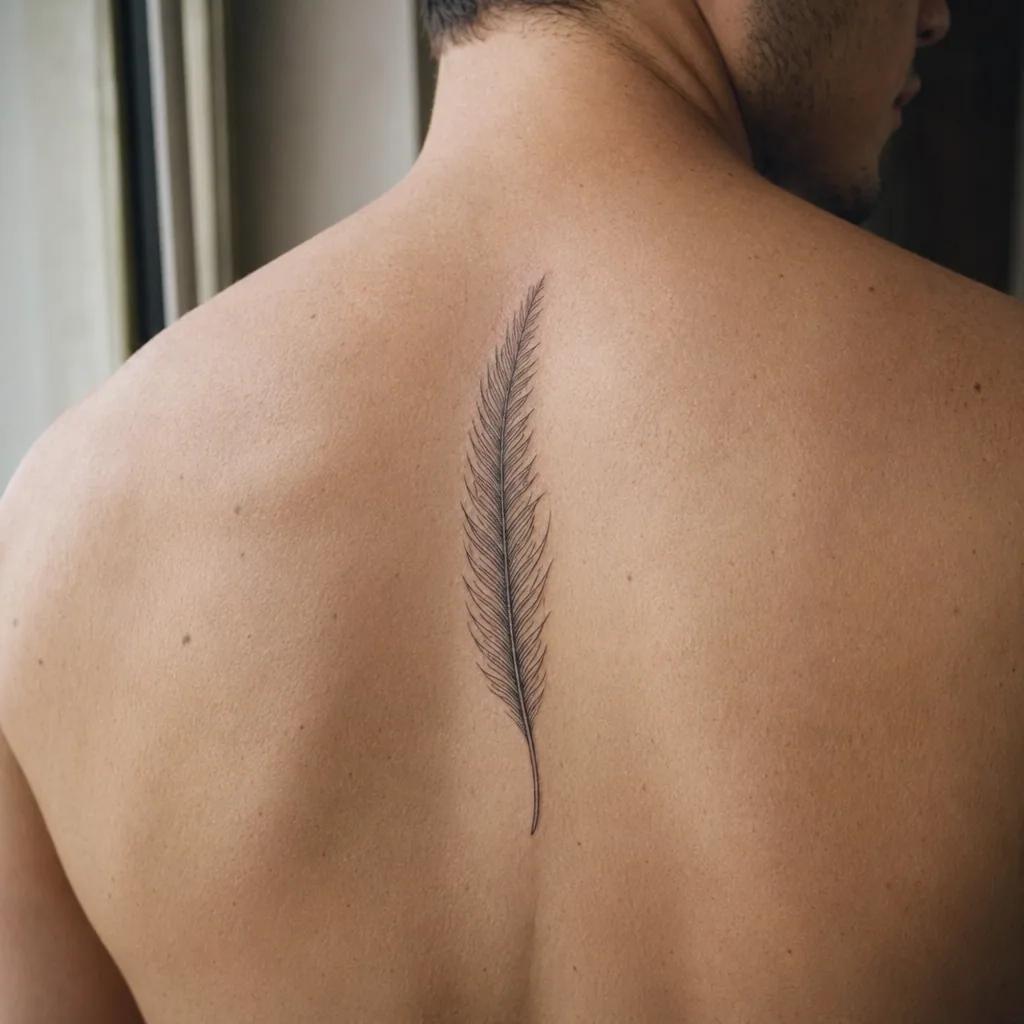 Hidden 365 days
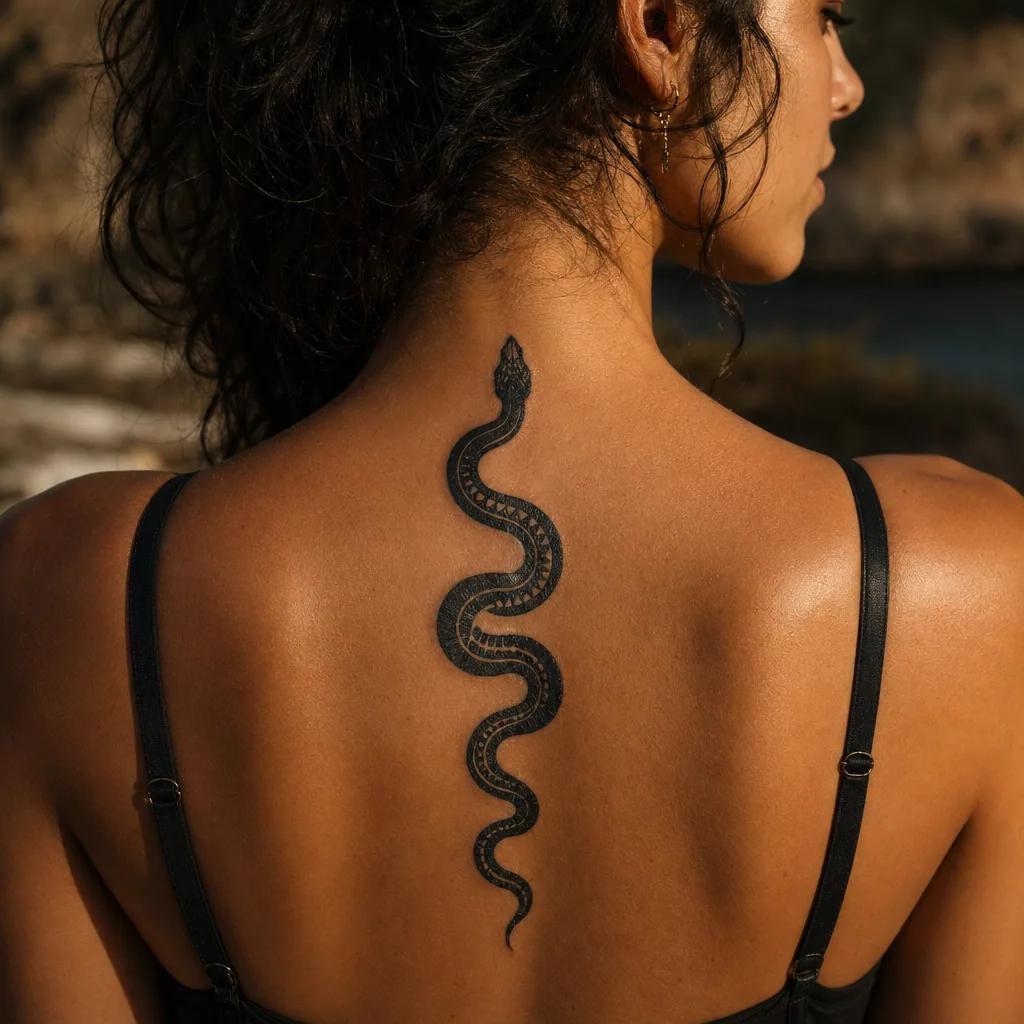 Hidden when dressed
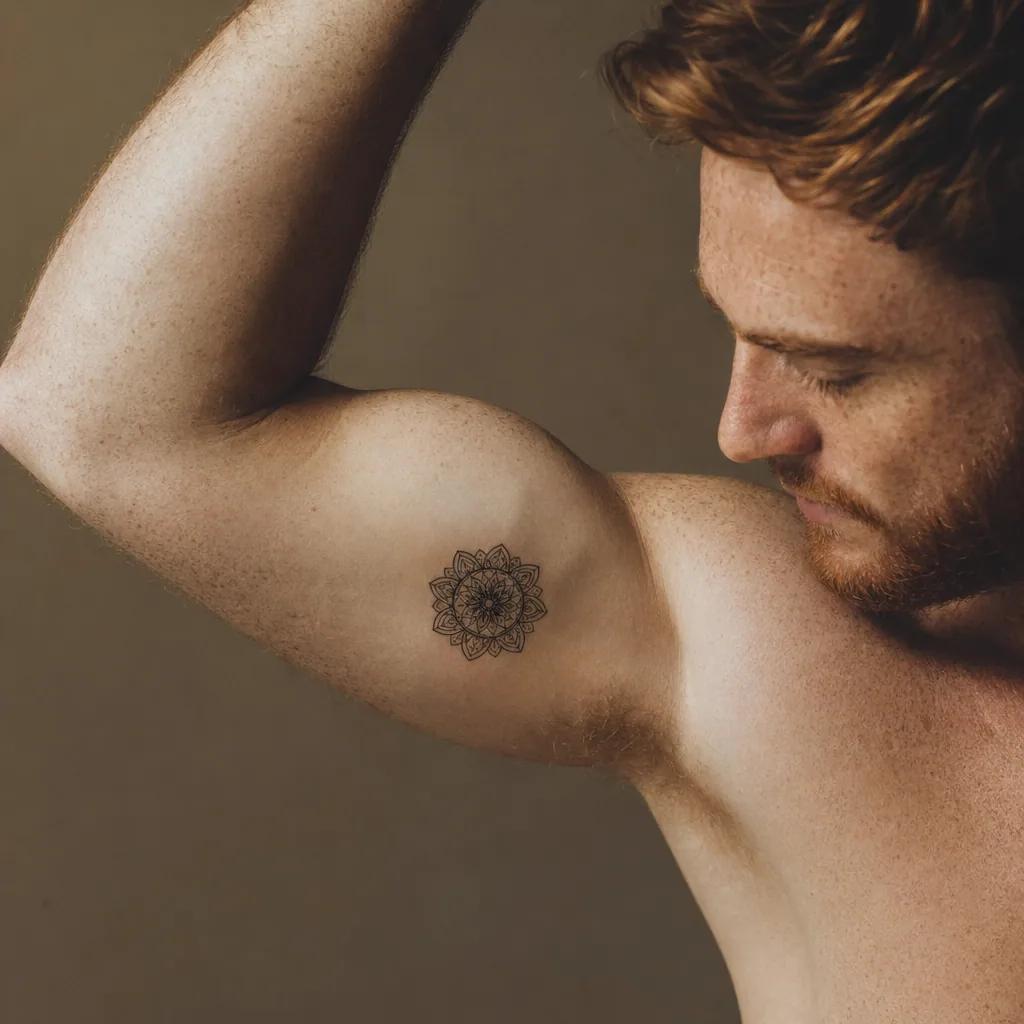 Hidden in a t-shirt
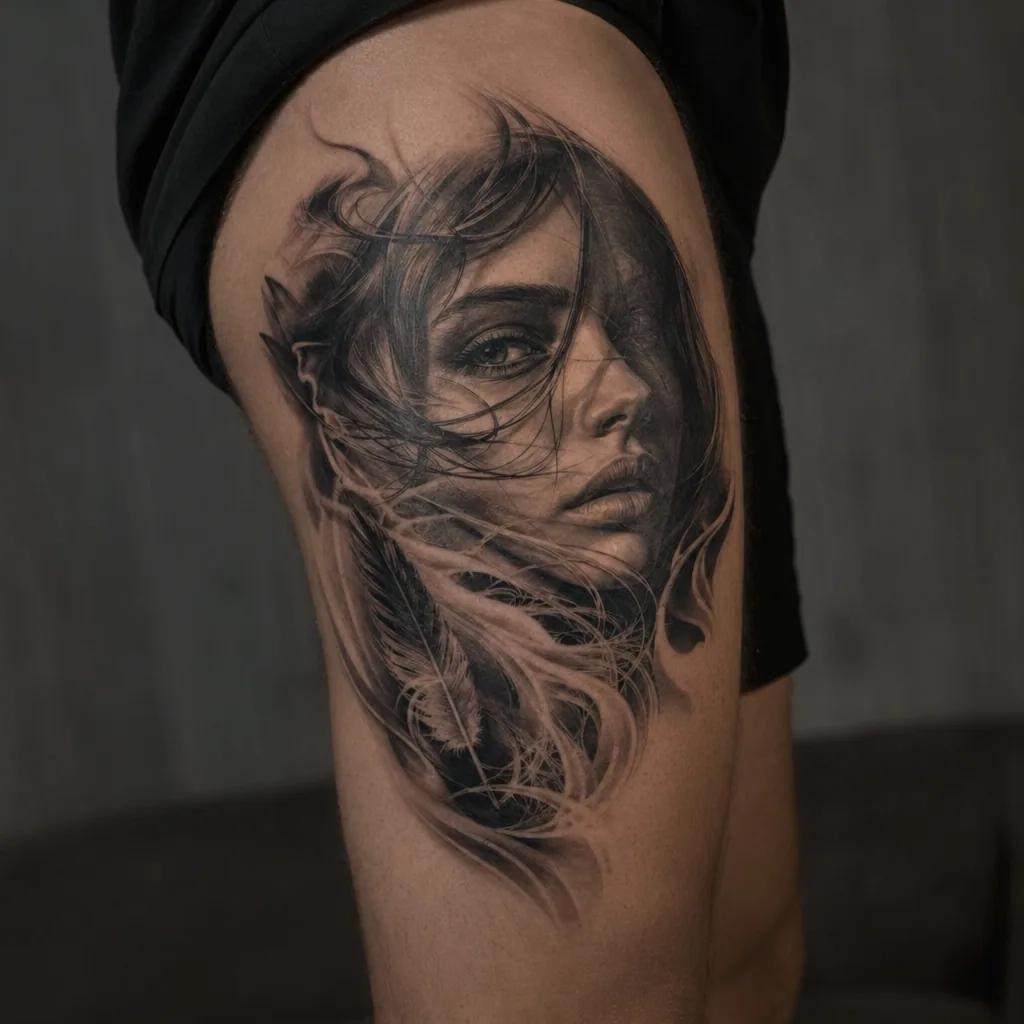 Hidden in pants
Designs generated with TryTattoo. All shown on zones that stay hidden in family, sports, and beach settings.
Why wanting to hide your tattoo is legitimate
Plenty of articles will tell you that "you should own your tattoos". Yet there are at least 5 legitimate reasons to want to hide one, and none of them is cowardice:
1. A conservative or religious family - some parents will never get over it, and you don't want to damage your relationship with them over a tattoo. Your body is yours, but family peace matters too.
2. A career that demands a classic image - finance, law, luxury, public service. We wrote a dedicated guide for that case (see [tattoos-and-work](/guide/tattoos-and-work)).
3. Sports with shared locker rooms - competitive swimming, rugby, team sports where communal showers are part of the ritual. You may prefer not to have to explain yourself.
4. Military, police, fire service - the uniform often requires that nothing shows past the collar, the short sleeves, or the pant leg. Recruits frequently have to attest that no tattoo is visible in service dress.
5. A personal wish for privacy - your tattoo may be deeply personal (grief, an intimate milestone) and you simply don't want to explain it to every stranger in summer. That's a perfectly valid reason.
The top 5 zones invisible in any situation
Here are the 5 placements that stay hidden in 95% of everyday life situations, including in a standard swimsuit:
- 01Shoulder blade / central upper back - invisible under any clothing, and even under most swimsuits (one-piece, classic two-piece). Big pieces are possible here.
- 02Ribs / side of the torso - under any t-shirt or covering swimsuit. A full one-piece hides it too. Only visible in a bikini or shirtless. Ideal for vertical compositions.
- 03Inner bicep - hidden by any t-shirt, polo, or shirt. Only visible with your arms raised above your head (rare in public). Works for a 5-15 cm tattoo.
- 04Upper outer thigh - under any normal-length shorts and pants. Only visible in very short shorts or swimwear. A large canvas for big pieces.
- 05Hip / bikini line - completely invisible except in underwear. The most discreet zone of all. Only ever seen in intimate settings.
Outside of formal work settings, these 5 zones cover almost every discretion need.
Three life contexts, three placement recommendations
The right placement depends on the exact context you need to manage. Here are three typical profiles with their recommended zones and zones to avoid.
Family / conservative relatives profile
Pros
- Zones invisible even when you undress at home
- Lets you keep your tattoo 100% secret
- Compatible with family vacations (beach, pool)
Cons
- Limits the zones to: shoulder blade, ribs, hip
- You carry a lasting secret, which can weigh emotionally
- Hard to grow into big pieces without risking discovery
Sports / regular athlete profile
Pros
- Accepted zones: upper back, shoulder blade, ribs, upper thigh
- Always invisible under a t-shirt and athletic shorts
- Locker room compatibility: fine if the zone is covered by your kit
Cons
- Avoid: forearm, calf, wrist (visible during sports)
- Healing is disrupted by sweat for the first 3 weeks
- International-level competition: coverage may occasionally be required
Uniform profile (military, firefighter, police)
Pros
- Approved zones: everything covered by a short-sleeved t-shirt plus pants
- Big pieces possible (back, ribs, thigh)
- Compatible with enlistment screenings
Cons
- Hands, fingers, neck, and lower forearm are often prohibited
- Each service has its own regulations to check
- Career progression can sometimes be slowed by visible tattoos
Real examples
Fine-line feather on the upper back
A delicate vertical composition along the spine, completely invisible under any clothing, even a tank top. An ideal first hidden project.
Invisible 365 days
Snake along the spine
A medium vertical piece on the lower spine. Only visible with a bare back, otherwise invisible even in a classic bikini.
Invisible dressed
Mandala on the inner bicep
A 5-7 cm composition on the inner bicep. Invisible under any t-shirt or shirt. Only visible with your arms raised above your head.
Invisible in a t-shirt
Large piece on the outer thigh
A 15-20 cm realistic portrait on the upper outer thigh. Invisible under longer shorts, jeans, or pants. Only visible in very short shorts or swimwear.
Invisible in pants
See your tattoo before the appointment
A previewed design helps you confirm the right size so it never peeks out of your usual clothes.
Preview your hidden tattooFrequently asked questions
01What is the absolute most discreet zone?
+
What is the absolute most discreet zone?
The **hip / bikini line** is technically the most invisible zone: covered by any underwear, including the most high-cut swimsuits. You only reveal it to a partner in intimate settings. Downsides: a painful zone to tattoo (8/10), skin that can shift with weight changes, and a placement that may be affected by body changes (pregnancy). It remains the ultimate option for a 100% secret tattoo.
02What if I still want to go to the beach with my parents?
+
What if I still want to go to the beach with my parents?
Pick a placement hidden **even in a swimsuit**. What does your swimsuit cover? A one-piece: everything except arms, legs from the knee down, neck, and head. A classic two-piece: add the stomach and part of the lower back as exposed. So the beach-safe zones with parents around are: shoulder blade, upper ribs, upper glute, upper outer thigh. You can swim worry-free. Absolutely avoid: forearm, calf, ankle, wrist, which are always visible in beachwear.
03Do tight athletic clothes (leggings, sports bra) hide a tattoo?
+
Do tight athletic clothes (leggings, sports bra) hide a tattoo?
Standard opaque leggings cover everything, but very thin, tight versions can let very dark ink show through slightly just under the fabric. As for sports bras: they only cover the chest, leaving ribs and back visible. Most of the time, your tattooed zone won't be an issue in sports as long as the garment physically covers it. Show-through concerns only the extreme 2-3% of cases (thin white leggings over dense black ink).
04Can you hide a tattoo with makeup when needed?
+
Can you hide a tattoo with makeup when needed?
Yes, with specialized products like Dermablend or tattoo cover lines. They conceal up to **90% of an average tattoo** with 5-10 minutes of application. Expect 20-40 € per tube, lasting several months of use. Limits: it doesn't work perfectly on very dark tattoos (dense blackwork), it's sensitive to sweat and friction, and it takes practice. For an occasional family wedding or a difficult gathering: a practical option. For daily use: it gets tedious.
05How should I react if my parents discover my hidden tattoo?
+
How should I react if my parents discover my hidden tattoo?
It's your body and you don't owe anyone permission, especially as an adult. But the relational side deserves preparation. Three tips: **(1)** don't lie if you're found out; own it calmly. **(2)** Explain the personal reason behind the design if there is one (a memory, a value); many parents forgive a tattoo "that means something" much more easily. **(3)** Give them time: 6-12 months to get used to it. The vast majority of family conflicts over tattoos resolve within a year.
06Military or police: where can you get tattooed without problems?
+
Military or police: where can you get tattooed without problems?
Many armed forces and police services now tolerate tattoos, but with strict restrictions that vary by country and branch: typically **banned on the neck, face, hands, and anywhere visible in service uniform**. In practice, aim for anything covered by a short-sleeved t-shirt (so NOT the lower forearm) plus long pants. Safe zones: back, ribs, upper bicep, thigh, upper calf. Rules differ between services and units, so always check the specific regulations of your service before booking.
Go further
More guides and inspiration to feed your project.
Sources
- Internal TryTattoo survey, clients' discretion contexts (n=220, 2026)

Author
The TryTattoo team
The studio behind the AI tattoo generator
TryTattoo helps people planning a tattoo project: AI design generation, on-skin preview, price estimation. Our guides rely on public sources, are illustrated with designs created with our own tool, and are reviewed before publishing.
More about TryTattoo →