Tattoo Guide/tattoos and work
Tattoos and work: which placements are easy to hide?
You want a tattoo, but you work in finance, law, luxury retail, or another environment where showing up to a client meeting with a visible sleeve is not the best move. Good news: there are at least six spots on the body that stay **completely invisible** under standard professional clothing, so you can get tattooed without worrying about cover-ups before every meeting.
7 min read · Updated Oct 2026
Torn between the shoulder blade and the inner bicep? Preview your design on your skin in both placements before deciding.
Preview your discreet tattooQuick answer
The best placements for a tattoo you can hide at work are the shoulder blade, inner bicep, ribs, inner ankle, foot, and behind the ear (under hair). All of them stay invisible under a standard shirt or t-shirt. Avoid the wrist, forearm, neck, hands, and fingers if you work in a formal environment. Most countries do not ban visible tattoos outright, but dress codes vary by employer and industry, so plan your placement before you book.
Key takeaways
- 01The invisible zones under a shirt or suit: shoulder blade, inner bicep, ribs, inner ankle, foot, behind the ear
- 02Avoid for formal jobs: wrist, forearm, hands, neck, fingers
- 03Visible tattoos are rarely banned by law, but dress codes vary by employer and industry
- 04The strictest sectors: finance, luxury, law, government, high-end hospitality
- 05A fine-line or minimalist style is easier to conceal (smaller size, moderate contrast)
Six zones, six ideas for tattoos that stay invisible at the office
TryTattoo designsHere are four classic placements for a tattoo you can wear with total peace of mind in a suit, blazer, or standard shirt. All of these zones stay covered effortlessly under standard professional attire.
 Hidden
 Hidden
 Hidden
 Hidden
Designs generated with TryTattoo. Placements chosen for maximum compatibility with formal professional attire.
What workplace rules actually say about tattoos
Let's clear up the legal picture first, because it is often fuzzy. In most countries, no law outright bans visible tattoos at work, and in many places refusing to hire someone purely because of a tattoo can fall under appearance-based discrimination rules. The exact protections vary a lot by country and jurisdiction, so check the rules where you live.
But. Employers can usually enforce a dress code when it is justified by the nature of the job. A private bank can require client-facing advisors to wear long-sleeved shirts (which happen to cover arm tattoos). An upscale restaurant can ask servers to keep tattoos covered if that is consistent with its brand. The key tests in most jurisdictions are that the policy is tied to the company's image and proportionate.
In practice: you are unlikely to be fired over a tattoo alone, but you can end up in uncomfortable situations (awkward moments in interviews, quiet exclusion from certain promotions). That is exactly why planning the placement matters if you are aiming for certain industries.
The 6 zones that stay invisible under professional attire
Here are the 6 placements that stay strictly hidden under a shirt, t-shirt, or standard suit. Ranked by absolute discretion:
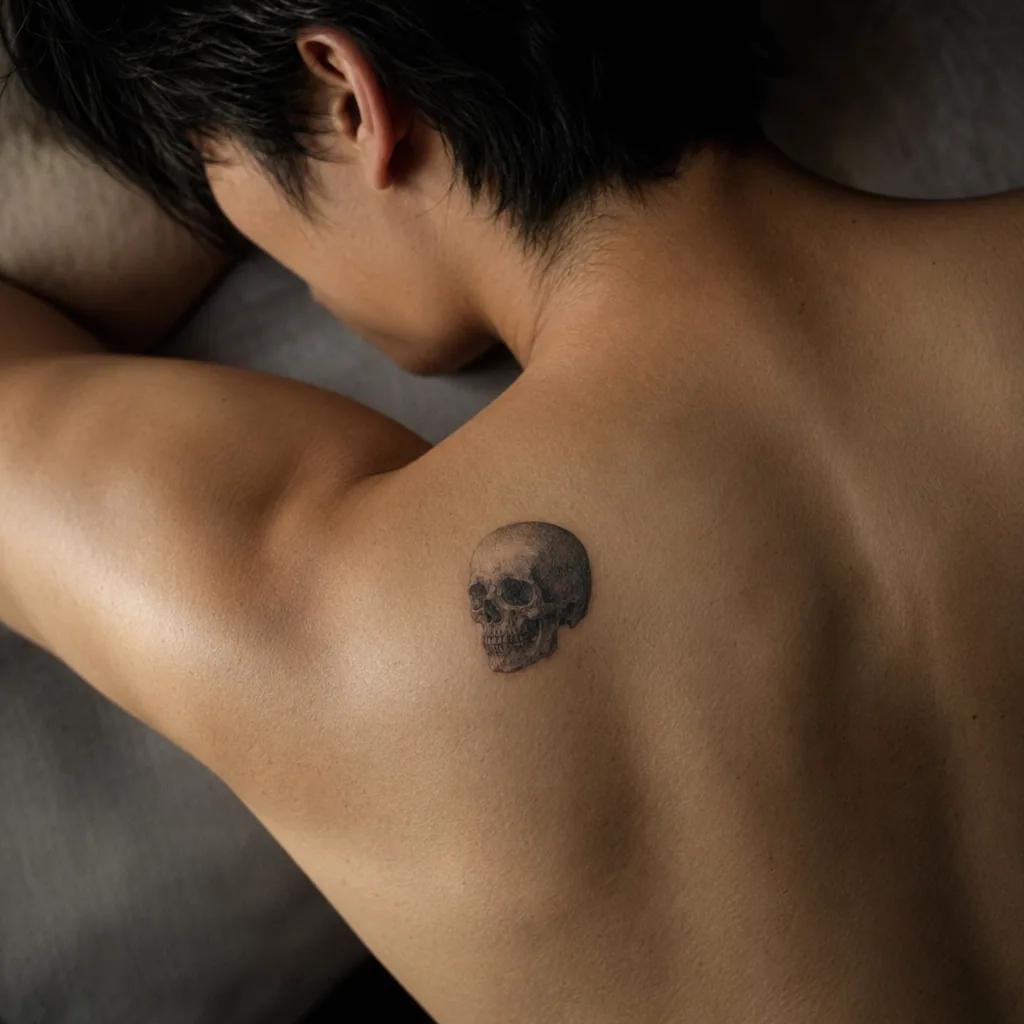
- 01Shoulder blade / upper back - invisible under any shirt, t-shirt, or sweater. Bonus: a large canvas for ambitious compositions. Ideal for a first discreet tattoo at a bigger size.
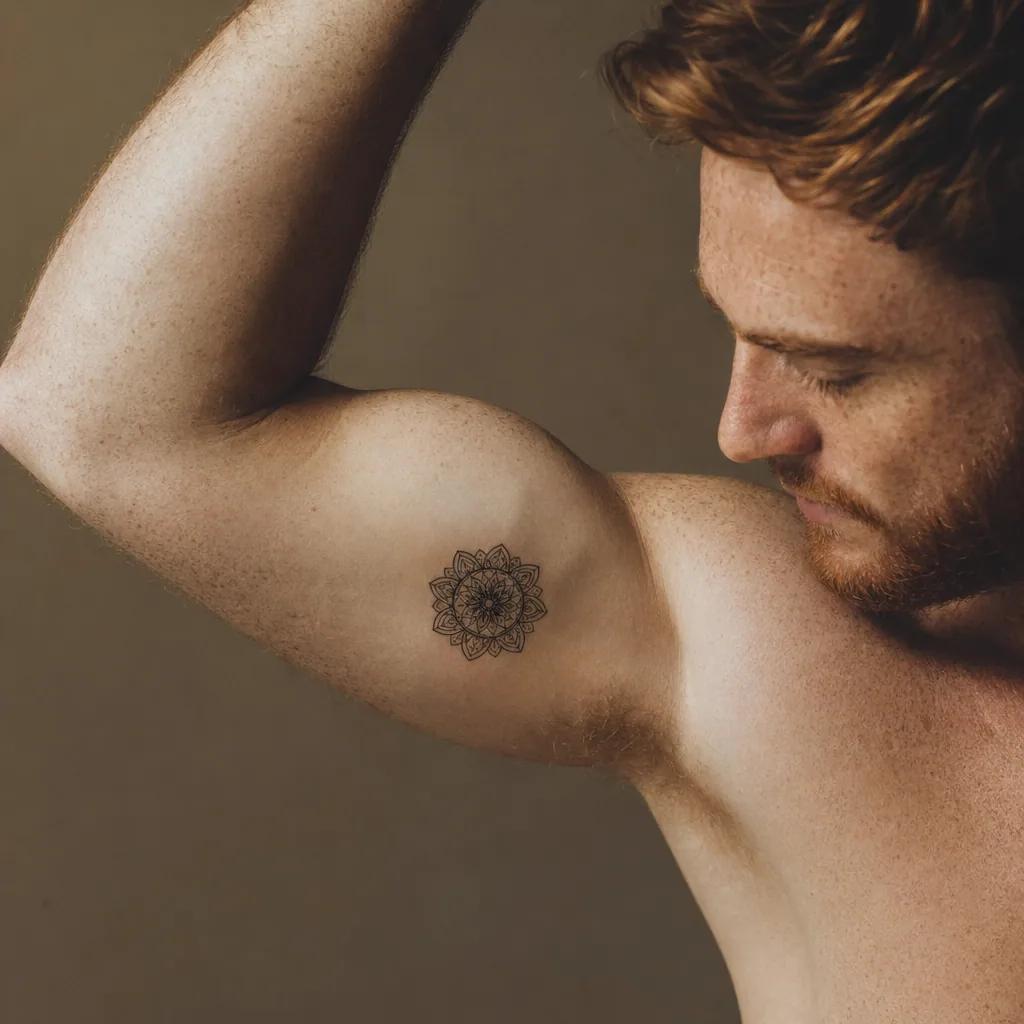
- 02Inner bicep - hidden by any sleeve, even short sleeves. Only visible when you raise your arms above your head (rare at the office). Works for a medium tattoo (8-12 cm).
- 03Ribs / side of the torso - invisible under any tucked-in shirt. A painful zone (ribs) but widely used for vertical compositions.
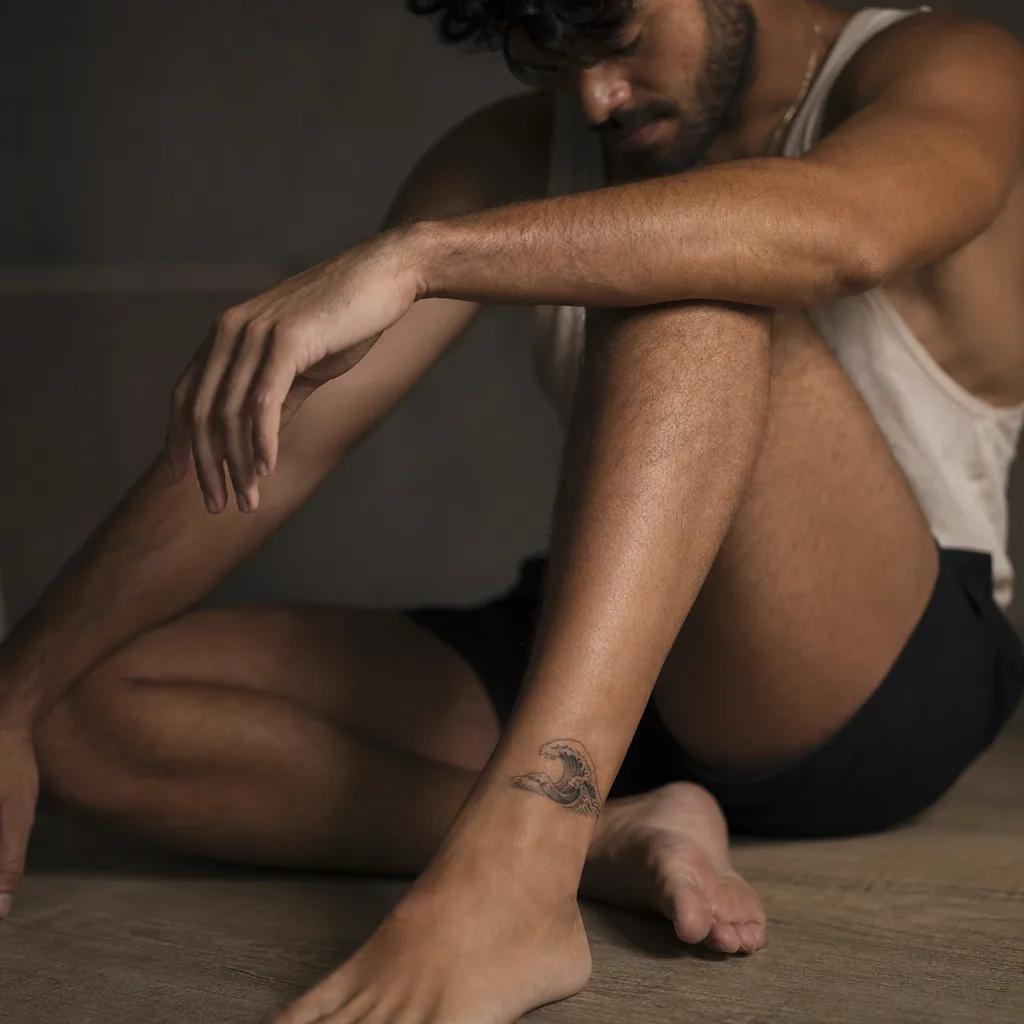
- 04Inner ankle - always under your sock or pant leg. Ideal for a discreet mini design. Only visible in shorts or barefoot.
- 05Foot / top of the foot - fully covered by dress shoes. Becomes visible in summer sandals, which is the only real risk.
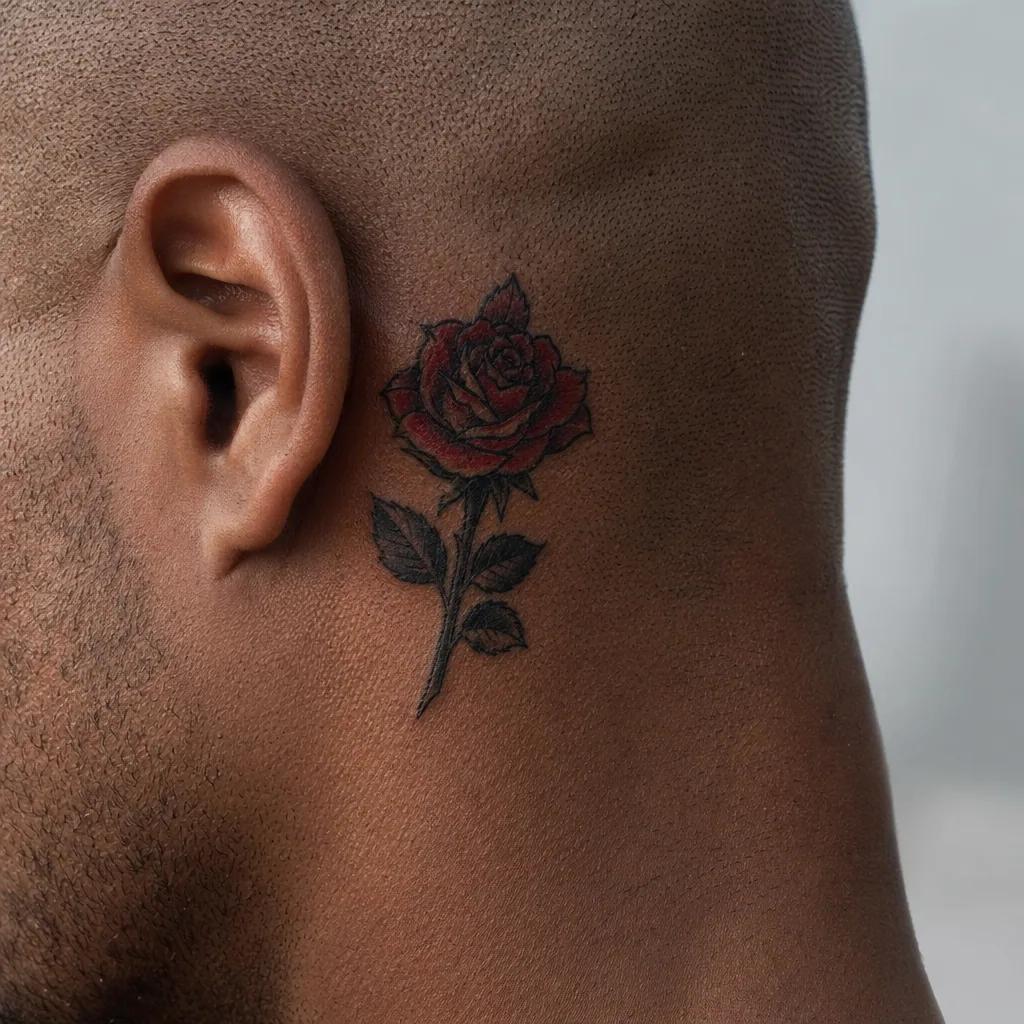
- 06Behind the ear / nape under the hairline - invisible if you have medium or long hair, or if you style your hair over the nape. Only visible with a very short cut or hair worn up. Limited to mini designs (3-5 cm).
On the flip side, steer clear of these zones if you want to stay discreet: wrist (visible with a watch and short sleeves), forearm (visible every summer), neck (visible with an open collar), hands and fingers (impossible to hide), calves (visible with shorter pants).
Which style should you choose for a discreet tattoo?
Placement alone is not enough. Style also affects how discreet a tattoo is. Three principles:
1. Small size. For a discreet tattoo, aim for 3-8 cm maximum. A larger design is harder to hide if the zone is partially exposed (a wrist under a rolled-up sleeve, for example).
2. Moderate contrast. Blackwork with dense black fills (a tribal lion) stays very visible, even at a small size. Fine-line or light dotwork blends into the skin much better, especially from a distance. For maximum discretion, very subtle low-contrast ink works best.
3. A readable but non-aggressive design. A 5 cm realistic skull behind the ear is still a skull, and it can raise eyebrows in a meeting. For professional settings, aim for neutral motifs: a geometric symbol, a plant, a stylized animal, a short quote. Save the bold designs (mythology, complex scenes) for the zones nobody will ever see (back, ribs).
Which industries are really strict in 2026?
Not all industries treat visible tattoos the same way. Here is the general pattern across formal and creative sectors, based on employer dress policies and job postings that mention appearance standards:
Very strict (visible tattoos discouraged): private banking and client advisory roles, corporate law firms, luxury houses (LVMH, Kering, Richemont), five-star hotels, fine dining, judiciary roles, diplomacy.
Strict (depends on role and seniority): large B2B companies (sales, leadership), retail banking, audit and consulting (Big 4 type firms), traditional TV media, mainstream fashion.
Tolerant: tech and startups (the vast majority), creative agencies, communications, nonprofits, research, higher education, healthcare (except some surgical settings), streetwear fashion and beauty.
Very tolerant or even favorable: skilled trades, the tattoo and beauty industries themselves, sports, performing arts, trendy restaurants, neighborhood cafes and bars, e-commerce.
If you might switch industries in 5-10 years, plan ahead: a tattooed forearm can limit your options in some environments, even though the overall trend is toward acceptance.
Three professional profiles, three placement strategies
The right placement depends as much on your current job as on where you want to be in 10 years. Here are three typical profiles with their recommendations.
Suit-and-tie jobs (finance, law, luxury)
Pros
- 100% invisible tattoo if the placement is chosen well
- No added wardrobe constraints
- Allows large pieces (back, ribs, inner bicep)
Cons
- Limited tattoo zones (no hands, wrist, or neck)
- Placement options reduced to 4-5 body zones
- Summer and vacations: be mindful around colleagues at the pool
Polo or business-casual jobs (sales, tech, B2B)
Pros
- More acceptable zones (lower forearm, calf, bicep)
- Generally more tolerance in these sectors
- Visible tattoos in summer with little real professional impact
Cons
- Still better to avoid hands, fingers, and neck
- Extra scrutiny during high-level client presentations
- Possible impact on some moves into senior roles
Uniform or dress-free jobs (trades, creative, freelance)
Pros
- Almost no professional restrictions
- Visible tattoos often valued as personal expression
- Total freedom on placement and size
Cons
- Be careful if you switch industries later
- Some individual clients may still be reserved
- Official photos (resume, LinkedIn) may need adjusting for the audience
Real examples
Mini mandala on the inner bicep
A 5 cm dotwork mandala on the inner bicep. Invisible under a standard t-shirt, polo, or shirt. One 1-2 hour session, moderate pain.
Hidden in a t-shirt
Rose behind the ear
A small 4 cm colored rose behind the ear. Invisible with medium or long hair. Ideal for jobs where longer hair is acceptable.
Hidden under hair
Skull on the shoulder blade
A medium 8-10 cm piece on the shoulder blade. Strictly invisible under any shirt, t-shirt, or sweater. Ideal for an ambitious design nobody at the office will ever see.
Hidden in a shirt
Mini design on the inner ankle
A 5 cm floral composition on the inner ankle. Hidden by any crew socks and any long pants. Only visible barefoot or in shorts.
Hidden in pants
See your tattoo before the appointment
A previewed design helps you nail the exact size that stays invisible under a shirt.
Preview your discreet tattooFrequently asked questions
01Can I be denied a job because of a visible tattoo?
+
Can I be denied a job because of a visible tattoo?
In many places, rejecting a candidate purely for a visible tattoo can fall under appearance-based discrimination rules, but protections vary widely by country and are notoriously hard to prove, since an employer will usually cite another reason. If you believe you were discriminated against, contact a local labor rights body or an employment lawyer. The pragmatic move, though, is still to place the tattoo in a concealable zone if you are targeting a strict industry.
02Can my employer force me to cover my tattoo?
+
Can my employer force me to cover my tattoo?
Often yes, under certain conditions. An employer can usually enforce a dress code if it is **justified by the nature of the job** and **proportionate to the goal**. Concretely: a private banking advisor can be required to wear long sleeves under a clear written policy. On the other hand, asking you to cover a foot tattoo in an open-plan office with no client contact would likely be excessive. Check your employee handbook or internal policy, which should be accessible to staff.
03Does tattoo-concealing makeup actually work?
+
Does tattoo-concealing makeup actually work?
Yes, fairly well. Specialized products (Dermablend, tattoo cover lines) can hide up to about 90% of a moderately contrasted tattoo with 5-10 minutes of application. Expect 20-40 € per tube, lasting several months of use. Limits: it does not work perfectly on very dark tattoos (dense blackwork stays visible), it is sensitive to sweat and friction (clothing, sports), and it takes practice. For an occasional client meeting it is a real option; for daily use it gets tedious.
04What is the long-term risk for my career?
+
What is the long-term risk for my career?
Hard to quantify precisely, but HR research suggests **visible tattoos** (hands, neck, face) still carry a statistical penalty in hiring for traditional sectors, and a neutral or even positive effect in creative or tech sectors. **Concealable tattoos** show no measurable impact on careers. The trend is toward acceptance as tattoos become increasingly common among younger generations, so in 10-15 years the picture will likely have shifted further. But to stay safe across your whole career, stick to hidden zones.
05What if I work remotely?
+
What if I work remotely?
Remote work relaxes the dress constraint for video calls. A forearm tattoo becomes acceptable in most B2B remote contexts. But watch out for occasional **office days** (offsites, client events, team dinners) where short sleeves might be expected. If you are 100% remote and never meet colleagues or clients in person, the constraint shrinks to what is visible on camera (face, neck, sometimes forearms depending on the camera angle).
06Should I tell my employer before getting a tattoo?
+
Should I tell my employer before getting a tattoo?
No, it is not required and it would even be counterproductive in most cases, since it creates an unnecessary precedent. The one situation where mentioning it can help: if you work in a heavily regulated environment (government, medical, legal) and your tattoo will be visible. In that case, raise it with your direct manager or HR before booking the appointment to avoid an unpleasant surprise. Otherwise, your tattoo is your private business.
Go further
More guides and inspiration to feed your project.
Author
The TryTattoo team
The studio behind the AI tattoo generator
TryTattoo helps people planning a tattoo project: AI design generation, on-skin preview, price estimation. Our guides rely on public sources, are illustrated with designs created with our own tool, and are reviewed before publishing.
More about TryTattoo →