Tattoo Guide/tattoo over scars
Can you get a tattoo over a scar?
A scar that has bothered you for years: a stretch mark, a C-section line, an old burn, the aftermath of severe acne. Good news: scar cover-up tattooing has become a real specialty, and many artists know how to turn a scar into part of the design or conceal it almost entirely. But there are technical rules to know first.
8 min read · Updated Oct 2026
An AI preview is even more useful for a cover-up: you confirm the design truly covers your scar before booking.
Preview your cover-up on your skinQuick answer
Yes, with conditions: the scar must be at least 18 to 24 months old to be fully stabilized. Before that, the skin reacts unpredictably. Thin surgical scars, healed stretch marks, and acne marks can be tattooed directly or worked into the design. Keloid (raised) scars, deep burns, and grafted skin require a dermatologist's opinion first. An artist experienced in cover-ups is the key to a good result.
Key takeaways
- 01The scar must be at least 18-24 months old before tattooing (stabilized skin)
- 02Keloid (raised) scars and deep burns: a dermatologist's opinion is mandatory
- 03Healed stretch marks and thin scars: tattooable without any particular issue
- 04The design must integrate the scar or cover it entirely, never just skirt around it
- 05Expect 30 to 50% more than a standard tattoo (a cover-up is double the technical work)
Three approaches to tattooing with a scar
TryTattoo designsHere are three examples of tattoos well integrated into areas where thin scars or stretch marks might be present. The design wraps the area naturally without drawing attention to the marks.
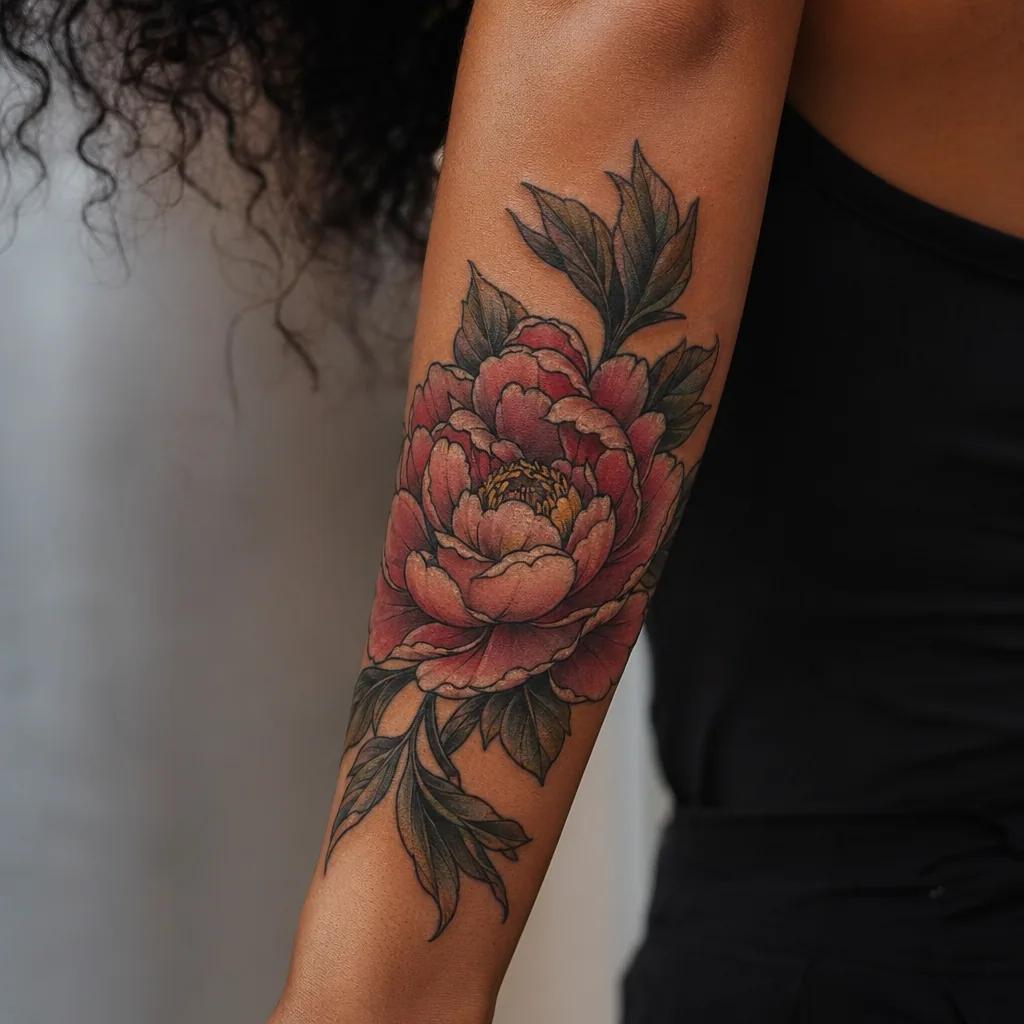 Cover-up
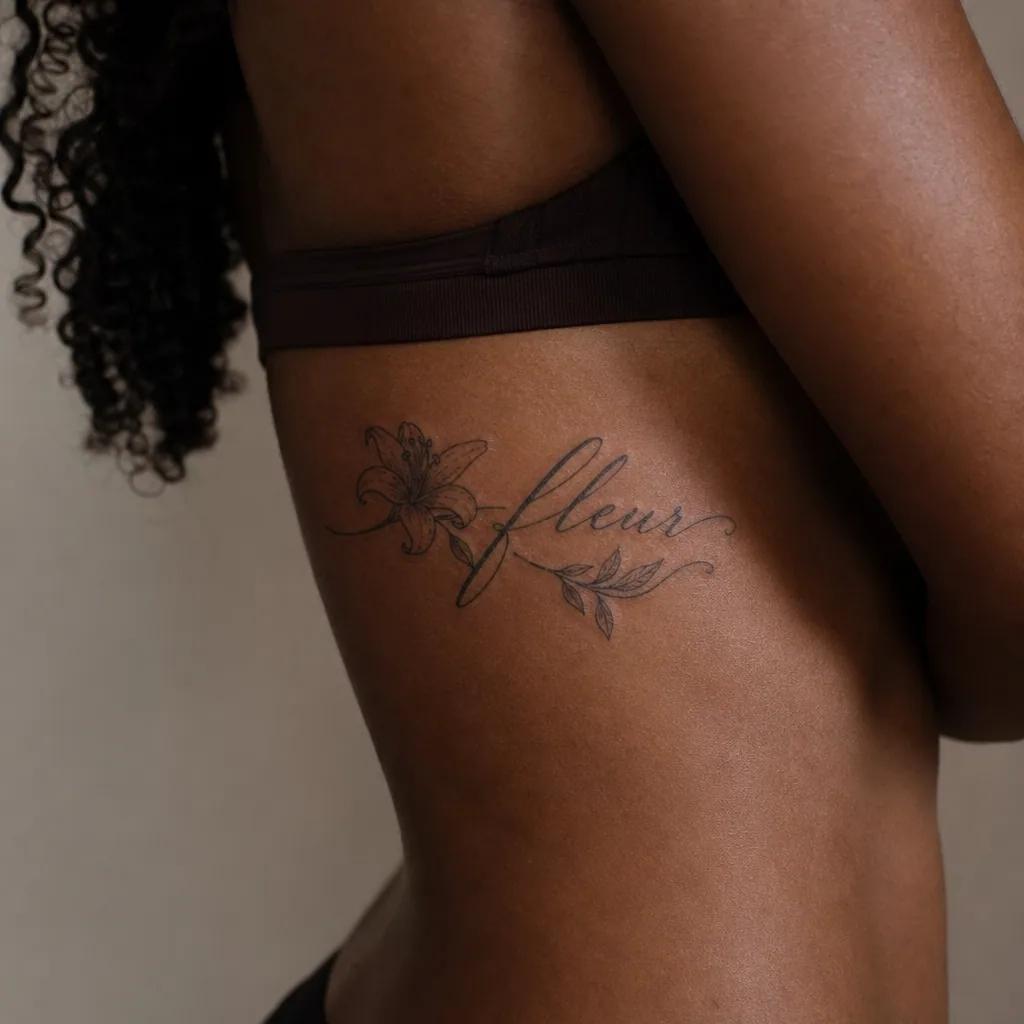 Integration
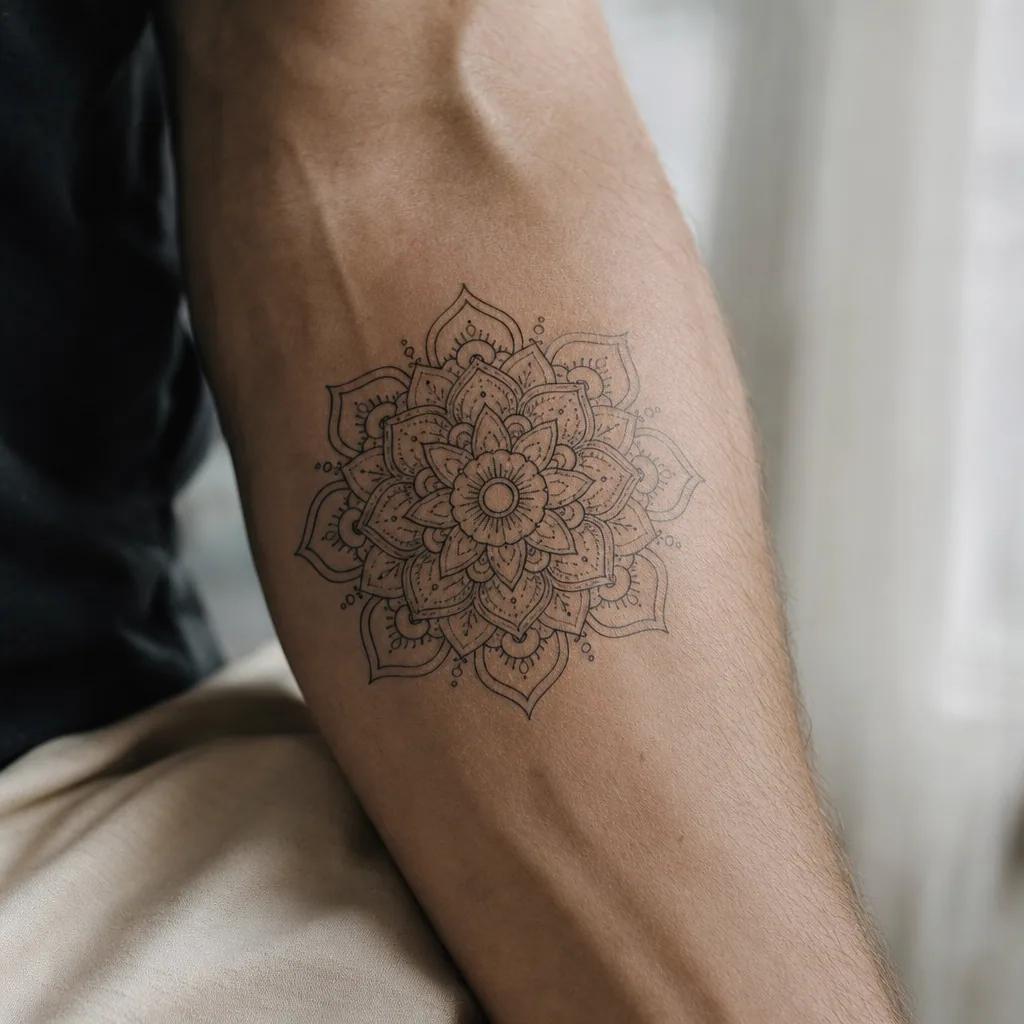 Geometry
Designs generated with TryTattoo. A cover-up requires a specialized artist who will adapt the motif to your exact scar.
Why you should wait 18-24 months after healing
A scar takes much longer than people imagine to stabilize deep down. It looks healed at 4-6 weeks, but the collagen remodeling under the skin continues for 18-24 months after the injury.
During that phase, two problems can occur if you get tattooed too early:
1. Ink takes poorly on tissue that is still forming. You can end up with patches where the ink didn't hold, shifts in tone, or blurry outlines right from the initial healing.
2. The scar can react to the trauma of the needle. If the scar isn't mature, local inflammation can reopen it, create hypertrophy (unexpected raised tissue), or trigger a keloid reaction in predisposed skin.
The golden rule: 2 years after the injury or surgery means a green light to tattoo safely. If you're between 12 and 24 months, ask the dermatologist who followed your healing.
Which types of scars can be tattooed?
Not all scars respond the same way to the needle. Here is the compatibility ranking, based on feedback from cover-up specialists:
- Healed stretch marks (flat, white or silvery skin) - fully tattooable. Ink takes well after 2 years. Ideal for post-pregnancy bellies, hips, and thighs.
- Thin surgical scars (C-section, appendectomy, mole removal) - tattooable after 18-24 months if the skin is flat. The artist can either work the line into the design or cover it entirely.
- Cystic acne scars - tattooable, but the uneven texture can show through the ink. Dotwork and textured designs conceal better than fine-line.
- Thin cut scars (healed self-harm scars) - tattooable, and even a recognized therapeutic step ("cover-up therapy"). Some studios specialize in it.
- Keloid scars (raised, red or purple) - not recommended without a dermatologist's opinion. Tattooing can worsen the reaction. If you are prone to keloids, accept that the answer is probably no.
- Second and third degree burns - reserved for highly specialized artists. Grafted skin has altered sensitivity and ink behaves unpredictably. Always consult a dermatologist.
- Very recent scars (under 18 months) - avoid. Wait.
Integrate the scar or cover it: two strategies
When you meet your artist, two approaches are possible depending on the nature of the scar:
Strategy 1: cover it completely. Ideal for scars you want gone entirely (stretch marks, a mole removal scar, an emotionally loaded mark). The tattoo needs a surface at least 2x larger than the scar and a visually dense design (color, shading, texture) to truly mask it. Fine-line doesn't conceal; you need neo-traditional, realism, or blackwork.
Strategy 2: work it into the design. Subtler and often more poetic. The artist uses the scar as an element of the motif: a C-section line becomes a tree branch, a round scar becomes the center of a mandala, an irregular mark becomes an organic detail. This approach is emotionally powerful because it turns the wound into a story.
Discuss both options with the artist. A good cover-up specialist will recommend the one that fits your scar and what you want to feel when you look at the result.
Which tattoo styles conceal a scar best?
Not all styles camouflage equally well. Ranked from most covering to least suitable:
- 01Neo-traditional and old school - thick outlines plus saturated color fills: the visual density absorbs the scar's texture. The number one choice of cover-up specialists.
- 02Black and gray realism - progressive shading drowns out variations in skin texture. Very effective on widespread stretch marks.
- 03Blackwork - solid black is the ultimate camouflage, but beware: on a raised scar, uniform black can actually reveal the texture in raking light. Reserve it for flat scars.
- 04Dotwork and ornamental - stippling visually fragments the area and conceals irregular scars well (acne, chickenpox). A mandala centered on a round scar is a classic.
- 05Watercolor - colored gradients draw the eye away but only cover moderately. Good for integration, insufficient for total coverage.
- 06Fine line and minimalist - avoid for cover-ups: thin lines highlight raised texture instead of hiding it. Reserve them for the poetic integration of a thin, flat scar.
The cost and flow of a cover-up session
A cover-up takes more time than a standard tattoo for two reasons: the design must be created in response to your unique scar (no generic template), and the application has to adapt to skin variations across the area.
Average price: expect 30 to 50% more than a tattoo of equivalent size without a cover-up. A 15 cm design over a scar runs 350-700 € depending on complexity.
Session time: 2-4 hours for an average cover-up, 6-10 hours (across several sessions) for large pieces. Fatigue is higher because the area is more sensitive.
More frequent touch-ups: ink sometimes takes less evenly on scar tissue. Plan for a touch-up at 6-8 weeks (often free), and sometimes a second one at 6 months for spots that didn't hold.
The complete flow of a cover-up tattoo
Total time: 24 months (scar maturation) + 2-4 months (preparation + tattooing)
- 01
Wait for the scar to mature (18-24 months)
Don't rush anything. If your scar is under 18 months old, book a dermatologist appointment to assess its maturity.
- 02
Preliminary dermatology consultation (for keloids, burns, or sensitive skin)
The dermatologist confirms your skin can handle the tattoo. Expect around 25-50 € or the local equivalent. Essential for a meaningful share of cover-up projects.
- 03
Find an artist who specializes in cover-ups
Search Instagram with hashtags like #scarcoverup #coveruptattoo #stretchmarktattoo. Check their healed portfolio at 3-6 months post-session.
- 04
Pre-session consultation (often free)
The artist examines your scar in person (not just from a photo) and proposes 1-2 design options adapted to it. Plan 30-60 minutes.
- 05
AI preview to validate the result
Use an AI tool like TryTattoo to visualize the proposed design on your skin. Adjust the size and composition if needed before booking.
- 06
Main session (2-4h)
The artist works patiently over the scar tissue. Speak up if you feel unusual pain. Scarred skin can be more or less sensitive than normal skin.
- 07
Healing plus possible touch-up (6-8 weeks)
Standard aftercare with extra attention. A touch-up at 6-8 weeks is very often needed on cover-ups. That's normal, and usually free.
Real examples
Peony over a thin arm scar
A large neo-traditional peony, 18 cm, that fully covers an old linear scar (mole removal, cut) on the forearm.
400-700 €
Floral composition on the side (post-pregnancy)
A flowering branch with lettering that integrates stretch marks on the side of the torso. The design wraps the marks instead of bluntly masking them.
300-600 €
Mandala over a round scar
A structured dotwork mandala, 12 cm, that uses a circular scar (vaccination, removed lesion) as the exact center of the motif.
250-450 €
See your tattoo before the appointment
You can share the simulation with your artist so they adapt the design to your exact scar.
Preview your cover-up on your skinFrequently asked questions
01Does it hurt more over a scar?
+
Does it hurt more over a scar?
The sensitivity of a mature scar is variable and unpredictable: some areas feel less than normal skin (destroyed nerve endings), others much more (chaotic nerve regrowth). You may feel strange sensations: intense localized burning, tingling at a distance, or complete numbness. Tell the artist immediately if abnormal pain occurs. Most cover-ups are not more painful than a standard tattoo, but the sensations can be more unsettling.
02Can you tattoo over a C-section scar?
+
Can you tattoo over a C-section scar?
Yes, after a **minimum of 24 months** post-surgery and with an artist experienced in cover-ups. A C-section scar is horizontal, thin, and usually nicely flat after 2 years. The most common designs: a floral composition flowing toward the lower belly, a horizontal branch following the line, or lettering that camouflages it. Don't attempt a C-section cover-up with a beginner. The skin behaves differently and demands experience.
03What about self-harm scars?
+
What about self-harm scars?
Yes, and it has become a recognized form of **symbolic reclamation**. A number of artists specialize in covering emotionally loaded scars (search for "scar cover-up" specialists or initiatives like Project Semicolon). The scars should be **at least 2 years old** and you should be in a stable place in your recovery. Some studios offer these sessions at reduced rates or free depending on your situation.
04Can stretch marks be completely erased by a tattoo?
+
Can stretch marks be completely erased by a tattoo?
Visually, yes, around 80-95% if the design is well planned. A healed stretch mark has a slightly different texture from healthy skin (thinner, shinier), so a very attentive eye may still catch subtle relief even under the ink. For near-perfect concealment, aim for a **visually dense** design (color, shading, rich motifs) over a **surface 2x larger** than the stretch-marked area. The belly, hips, and thighs are the most commonly treated zones for stretch mark cover-ups.
05Can an artist refuse to tattoo my scar?
+
Can an artist refuse to tattoo my scar?
Yes, and it's actually a good sign. A serious artist will turn down a scar that is too recent (under 18 months), an active keloid, or an area they don't feel able to handle cleanly. That refusal protects their work and your skin. If they decline, ask for a referral: cover-up specialists know each other and they'll know who to send you to.
06Does the tattoo erase the scar?
+
Does the tattoo erase the scar?
No, let's be precise: a tattoo doesn't remove the scar, it makes it invisible or transforms it. The texture and relief of the skin remain identical under the ink. To the touch, the scar is still there; to the eye, it disappears 80-95% with a well-designed piece. If your goal is to physically remove the scar, that's the domain of dermatology (laser, surgery), not tattooing. Many people actually combine both: laser treatment first, tattoo afterward.
07How long should I plan from idea to finished tattoo?
+
How long should I plan from idea to finished tattoo?
Longer than for a standard tattoo. Count: scar maturation if it's recent (up to 18-24 months), a dermatology consultation if needed (1-3 weeks), finding a specialized artist (2-4 weeks), consultation and design (2-3 weeks), booking (2-8 weeks depending on their schedule). In total: **3 to 6 months** once your scar is mature, or up to **2 years** if you're starting from a recent injury. Be patient. The result depends on it.
Go further
More guides and inspiration to feed your project.
Sources
- Internal TryTattoo survey, scar cover-ups (n=85 cases, 2025-2026)
Author
The TryTattoo team
The studio behind the AI tattoo generator
TryTattoo helps people planning a tattoo project: AI design generation, on-skin preview, price estimation. Our guides rely on public sources, are illustrated with designs created with our own tool, and are reviewed before publishing.
More about TryTattoo →