Tattoo Guide/tattoos that age
Which tattoos age the best over the long term?
You're choosing a design for life. So you might as well know which one will still look good in 20 or 30 years, and which one will turn into a blurry smudge you no longer want to talk about. The verdict isn't a matter of taste, it's a matter of physics: line thickness, contrast, and sun exposure.
7 min read · Updated Oct 2026
Torn between fine-line and blackwork? Generate both versions of your design with TryTattoo and compare them on your skin.
Visualize your design before the appointmentQuick answer
Tattoos that age well share three traits: crisp, bold outlines (at least 1 mm), a design readable from 2 meters away, and a placement on skin that rarely sees the sun. Concretely: old-school traditional, blackwork, structured dotwork, and black and gray realism hold up 30-40 years without major flaws. For longevity, avoid ultra-thin fine-line, watercolor, details smaller than 2 mm, and exposed areas like the hands and feet.
Key takeaways
- 01The styles that age best: old-school, blackwork, structured dotwork, black and gray realism
- 02Ultra-thin fine-line (under 0.5 mm) starts to blur after 7-10 years
- 03The sun is enemy number one: SPF 50 for life to keep the intensity
- 04The more a tattoo is simple and readable from 2 meters, the better it ages
- 05A touch-up every 8-15 years is enough to keep any tattoo crisp
Four styles, four ways of aging
TryTattoo designsHere are four iconic styles with their aging prognosis over 20+ years. The contrast is striking between a solid blackwork and an ultra-thin fine-line.
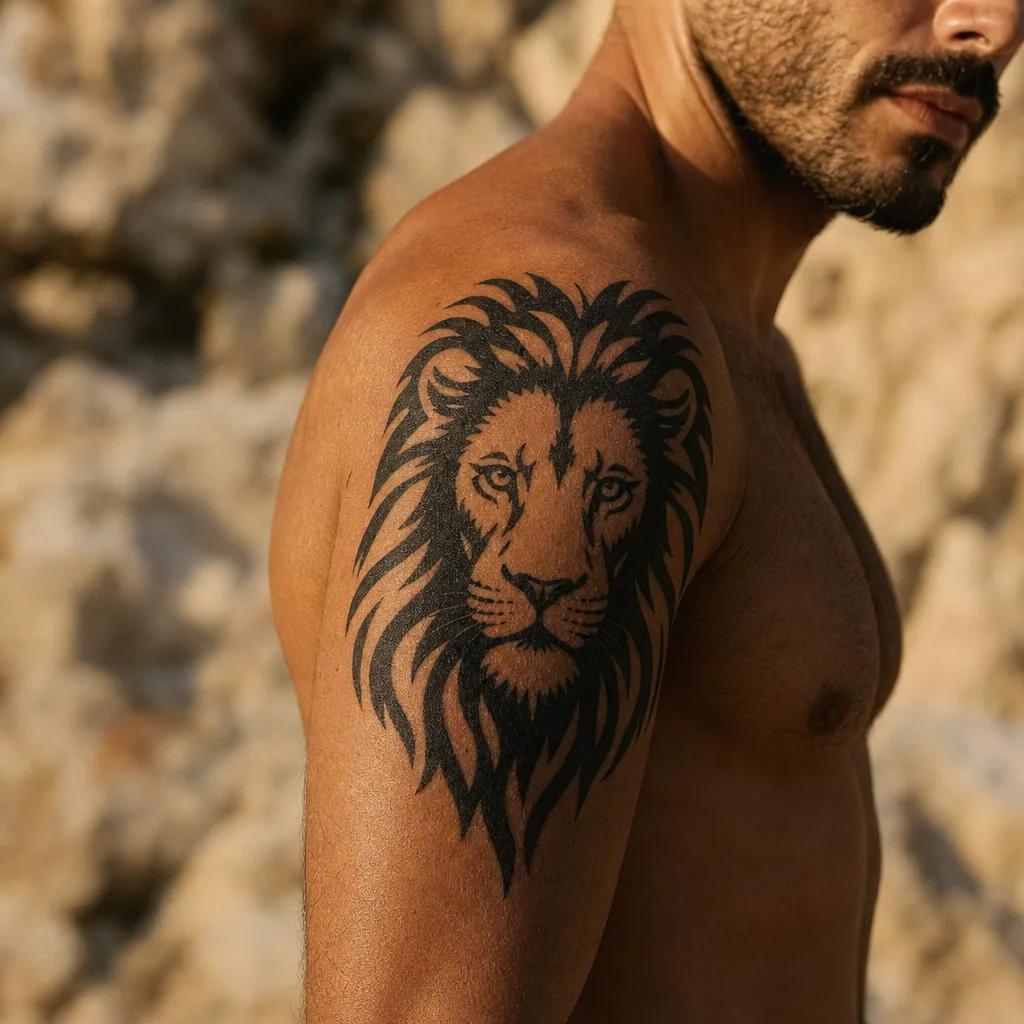 Ages ★★★★★
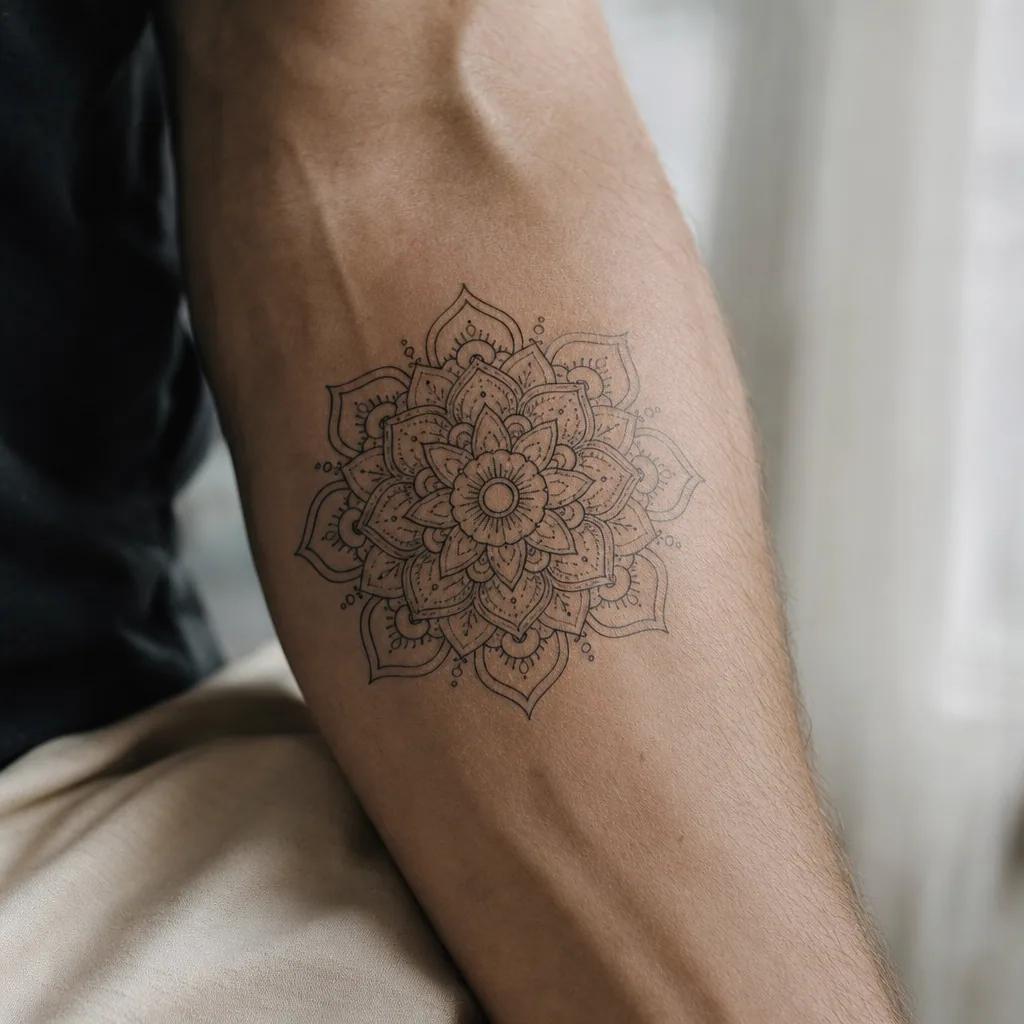 Ages ★★★★
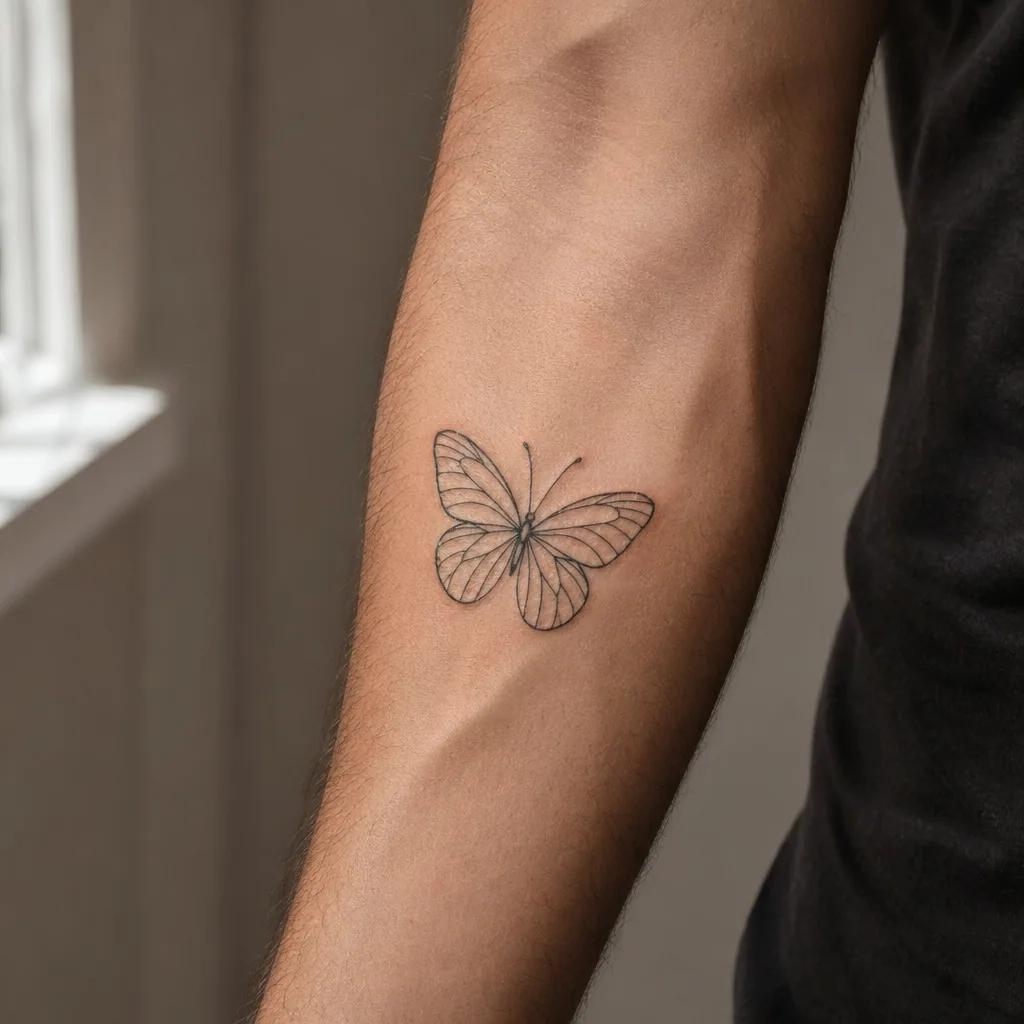 Ages ★★★
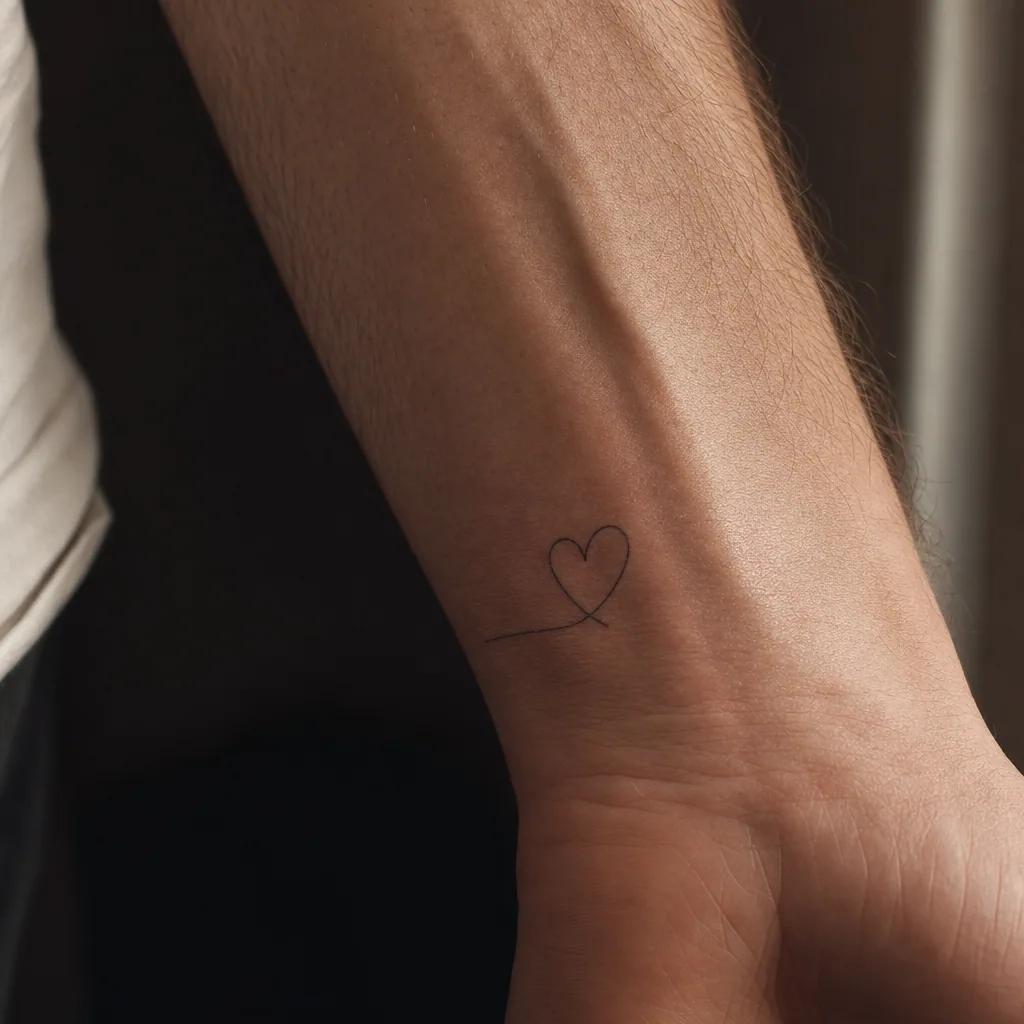 Ages ★★
Designs generated by TryTattoo. Ratings based on cross-referenced artist feedback and healed photos at 5, 10, and 20 years.
Why tattoos age (and what happens under the skin)
Tattoo ink sits in the dermis, the middle layer of the skin, about 1 mm deep. It's the ideal place for ink to stay trapped for life, but it's not a static place. Three biological phenomena explain why a tattoo changes over the years:
1. Gradual ink diffusion. Macrophages (immune cells) continuously attack the foreign pigments. Over 20-30 years, a fraction of the ink is slowly carried off toward the lymph nodes. The result: outlines get slightly softer and fine details fade.
2. Skin aging. Skin loses about 1 percent of its collagen per year after age 30. It becomes thinner, looser, and creases more. A tattoo placed on an area that stretches (stomach, underside of the arm) eventually stretches with it.
3. UV exposure. UVA rays penetrate down to the dermis and break down pigments. It's by far the biggest factor: a tattoo kept covered its whole life stays dramatically sharper than one regularly exposed to the sun.
Tattoo styles ranked by longevity
Here is a ranking of popular styles by their ability to stay crisp and readable over the decades, based on observation of tattoos healed 20-40 years ago:
- ★★★★★ Old-school / American Traditional: the undisputed longevity champion. Very bold black outlines (1.5-2 mm), a restrained palette (red, yellow, black, deep green), zero fine detail. Plenty of tattoos from the 1950s are still perfectly readable today.
- ★★★★★ Blackwork (thick lines, solid black fills): black ink is the most stable over time, and solid surfaces hide diffusion. Easily holds 30+ years.
- ★★★★ Black and gray realism: good longevity thanks to black as the only pigment. Gray shading can fade but the outlines hold. A touch-up at 15-20 years is often needed to revive the lighter areas.
- ★★★★ Structured dotwork (mandala, geometric): when the dots are large enough (0.3-0.5 mm) and well spaced, it ages excellently. Ultra-fine dotwork (the "spray" effect) fades much faster.
- ★★★ Neo-traditional: good longevity thanks to strong outlines, but the colors fade and often call for a touch-up after 10-15 years.
- ★★ Fine-line (lines under 0.5 mm): goes blurry after 7-10 years, especially on crease-prone areas (wrist, fingers, behind the ear). A seductive look, but accept it as an evolving one.
- ★★ Color realism: red, orange, and yellow pigments fade first (UV-sensitive). Holds 10-15 years before needing a major touch-up.
- ★ Watercolor: the worst. No outlines, diluted pigments, washes that spread. 5-8 years before it looks like an actual stain instead of an artistic intention.
Choosing a style isn't just an aesthetic decision: it's also a decision about how long you expect your tattoo to last.
How placement affects longevity
Even the best style will age badly on the wrong spot. Placement matters almost as much as style.
Areas that age well: shoulder, back, shoulder blade, outer thigh, outer forearm, calf. Thick skin, few creases, little daily friction. A tattoo there will hold 20-30 years without major deterioration.
Middling areas: wrist, biceps, inner arm, lower back. Moderate skin, but variable exposure (sleeves, movement). Expect 15-20 years before a touch-up.
Areas that age badly: hands, fingers, feet, neck, inner wrists. Thin skin plus constant friction (hand washing, shoes, clothing contact). A hand tattoo visibly fades in as little as 3-5 years. If you really want one, accept it as a short-lived design that will need yearly touch-ups.
How to maximize the longevity of your future tattoo
Four decisions at the briefing stage drastically slow down aging:
1. Aim for readability at 2 meters. If someone has to step closer to understand the design, it's too busy. A tattoo readable from a distance stays readable once the ink starts to diffuse. Ask your artist: *"Will all of this still be visible in 15 years?"*
2. Avoid details smaller than 2 mm. Tiny dots, thin lettering, intricate textures: all of it will merge into ill-defined blotches within 10-15 years. If your design is detail-heavy, ask the artist to simplify or scale it up.
3. Make black your dominant color. Black ink is the most stable. If you want color, keep it for accents and use saturated pigments (deep red, forest green) rather than pastels.
4. Choose the right artist. An experienced artist knows exactly how deep to set the ink for your skin and uses certified inks that resist UV better. A beginner or a scratcher can produce work that looks great fresh out of the studio but turns blurry within 5 years.
Three style families, three prognoses
For a quick orientation, here are the pros and cons of the three big style families in terms of aging.
High-longevity styles (old-school, blackwork, dotwork)
Pros
- Stay crisp for 25-40 years without a major touch-up
- Black ink stable against UV
- Bold outlines that mask natural diffusion
- Often a timeless aesthetic
Cons
- Visually heavier, less subtle
- Old-school means a limited palette if you want delicate color
- Less of a "delicate" effect than fine-line
Medium-longevity styles (black and gray realism, neo-traditional)
Pros
- Excellent level of detail when freshly done
- Impressive, highly customizable visual effect
- Simple touch-ups at 10-15 years to revive the intensity
Cons
- Require a very experienced artist to hold up well
- Colors (in neo-traditional) need reviving after 10-15 years
- Cost more from the start
Low-longevity styles (fine-line, watercolor, delicate color)
Pros
- Delicate, currently trendy aesthetic
- Ideal for intimate or symbolic designs
- Visually more subtle
Cons
- Visible blurring as early as 7-10 years
- Require regular touch-ups (every 5-8 years)
- Watercolor can become unreadable within 5-8 years
- Very sensitive to sun and placement
Real examples
Blackwork lion on the shoulder
Blackwork style with bold outlines and solid black fills. The shoulder (a rarely exposed area) plus solid lines equals an excellent 30-year prognosis.
Longevity ★★★★★
Dotwork mandala on the forearm
A geometric composition in structured dotwork with well-spaced dots. Ages very well thanks to the regular pattern and the stability of black ink.
Longevity ★★★★
Fine-line butterfly on the forearm
Modern fine-line with delicate strokes. Expect the first blurring around 7-10 years, with a touch-up recommended to keep it crisp.
Longevity ★★★
Mini fine-line heart on the wrist
Ultra-thin lines (under 0.5 mm) on an area exposed to sun and friction. The most demanding combination to maintain, with a touch-up needed as early as 5-7 years.
Longevity ★★
See your tattoo before the appointment
Previewing your design in several styles helps you pick the one you will still love in 20 years.
Visualize your design before the appointmentFrequently asked questions
01How often does a tattoo need a touch-up?
+
How often does a tattoo need a touch-up?
It all depends on the style and placement. A blackwork or old-school piece on the back can hold 25-30 years with no touch-up at all. A fine-line on the wrist or vivid color on the forearm will need a first touch-up between 8 and 12 years. If you start seeing gaps in the ink, blurry outlines, or clearly washed-out colors: it's time. Expect 30-100 euros depending on the surface to redo, sometimes free if it's recent work by the same artist.
02Is fine-line really doomed to disappear?
+
Is fine-line really doomed to disappear?
Not disappear exactly, but evolve. A well-executed fine-line keeps its shape and readability for 10-15 years without trouble. Beyond that, the lines thicken slightly and the finest details (a butterfly's antennae, the lacework of a fine-line mandala) merge together. It's a style to embrace as **living** rather than permanent. If you want a fine-line that lasts, pick a simple design with few details, done by an experienced artist who sets the ink at the right depth.
03Do all colors age the same way?
+
Do all colors age the same way?
No, there's a clear hierarchy. From most stable to least stable: **black > deep red > forest green > navy blue > yellow > orange > pink > purple > white**. White is notoriously unstable and yellows within 2-3 years (which is why many artists refuse to tattoo pure white). Yellow and orange pigments lose 30-40 percent of their intensity within 10 years. Blacks and deep reds stay intense for 20+ years. When in doubt, choose saturated colors and avoid pastels.
04Does a tattoo age faster if you gain or lose weight?
+
Does a tattoo age faster if you gain or lose weight?
Yes, but the impact depends on the area. Significant weight change (10-15 kg or more) deforms the skin in fat-storing zones: stomach, hips, inner thighs, lower back. A tattoo there can end up visibly distorted. Muscular areas (arms, calves, upper back) are less affected except in extreme cases. Pregnancy stretches the stomach skin almost systematically, which is why many artists advise against tattooing the stomach before you're done having children.
05Which style should I choose for a first tattoo if I want it to last?
+
Which style should I choose for a first tattoo if I want it to last?
Aim for a **simple design plus crisp outlines plus a stable placement**. Three examples that combine all three criteria: a personal symbol in blackwork on the shoulder, a short phrase in understated lettering on the forearm, a dotwork mandala on the calf. Avoid for a first: ultra-thin fine-line on the fingers, watercolor, or a hyper-detailed realistic portrait. There will be plenty of time for more ambitious pieces later, once you know how your skin responds.
06Should you completely redo a tattoo that has aged badly?
+
Should you completely redo a tattoo that has aged badly?
Three options depending on the state: **(1) A touch-up** if the ink has simply faded: 30-100 euros to revive it. **(2) A cover-up** if the tattoo has gone blurry or you no longer like the design: an artist covers it with a new, larger, denser motif, at roughly 1.5 to 2 times the price of a fresh tattoo. **(3) Laser removal** if you want it gone to start from scratch: 800-2,400 euros over 6-12 sessions. By far the most expensive option, reserved for serious regrets.
Go further
More guides and inspiration to feed your project.
Sources
- Comparative observation of healed tattoos at 5, 10, and 20 years (sample of 80 tattoos, 2026)
- Dermatological studies on tattoo pigment stability (Journal of Dermatology, 2024)

Author
The TryTattoo team
The studio behind the AI tattoo generator
TryTattoo helps people planning a tattoo project: AI design generation, on-skin preview, price estimation. Our guides rely on public sources, are illustrated with designs created with our own tool, and are reviewed before publishing.
More about TryTattoo →