Tattoo Guide/tattoo cover up
How do you cover up a tattoo (cover-up)?
An ex's name, an early-2000s tribal, a botched flash you brought back from vacation... Almost everyone has **a tattoo they regret**. Good news: in most cases you don't need to remove it, you can **transform** it into something you love. Here is what is actually possible with a cover-up, and how to visualize your future tattoo before you ever step into the studio.
6 min read · Updated Oct 2026
Want to cover a tattoo? Generate ideas suited to a cover-up and preview them on your skin before your appointment.
Preview your cover-upQuick answer
A cover-up is a new tattoo designed to hide an old one. It works in the vast majority of cases, as long as the new design is larger and darker than the old one, with a dense or organic pattern (flowers, animals, blackwork, mandala). A very dark tattoo may need 2-3 laser sessions to lighten it first. The hardest part is usually picturing the result: with [TryTattoo](/studio), you generate cover-up ideas and preview them on your skin before committing.
Key takeaways
- 01Golden rule: the new design must be larger and darker than the old one
- 02The best coverage comes from dense, organic designs (flowers, animals, blackwork)
- 03A very dark tattoo may need 2-3 laser sessions to lighten it first
- 04The real blocker is picturing the result: preview it before you pay
- 05A cover-up is a big fresh tattoo: healing matters as much as the design
Designs that cover well
TryTattoo designsA good cover-up relies on a dense, dark design. Solid florals, black and grey realism, wide shapes: these are the kinds of designs that effectively camouflage an old tattoo.
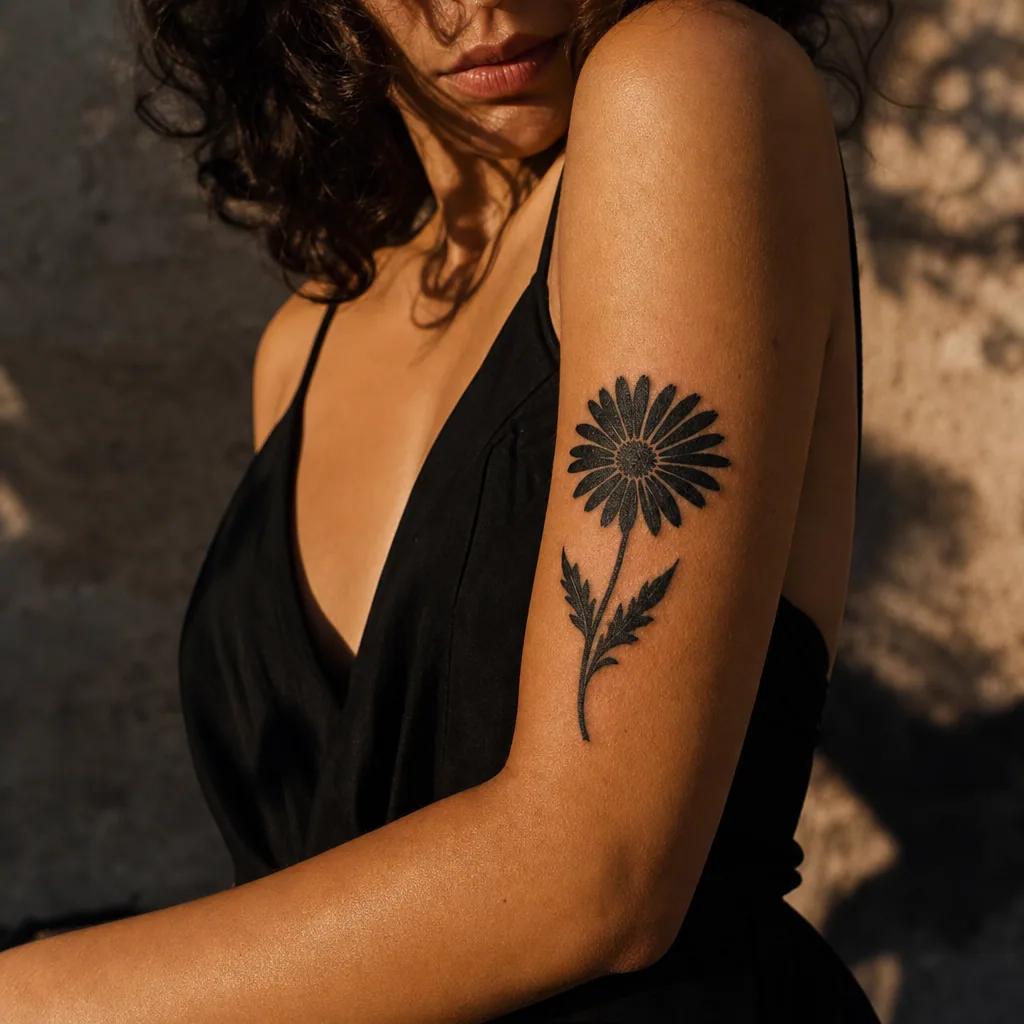 Dense
Dense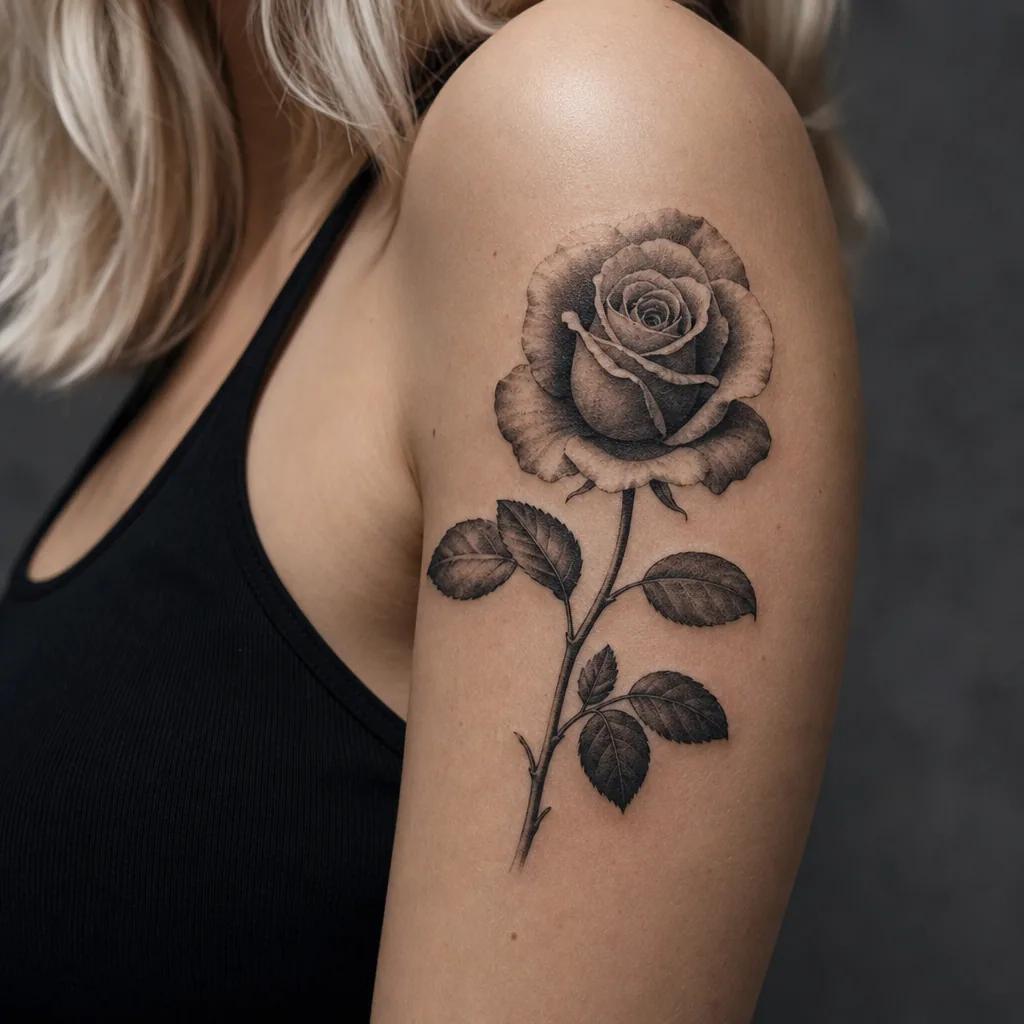 Realism
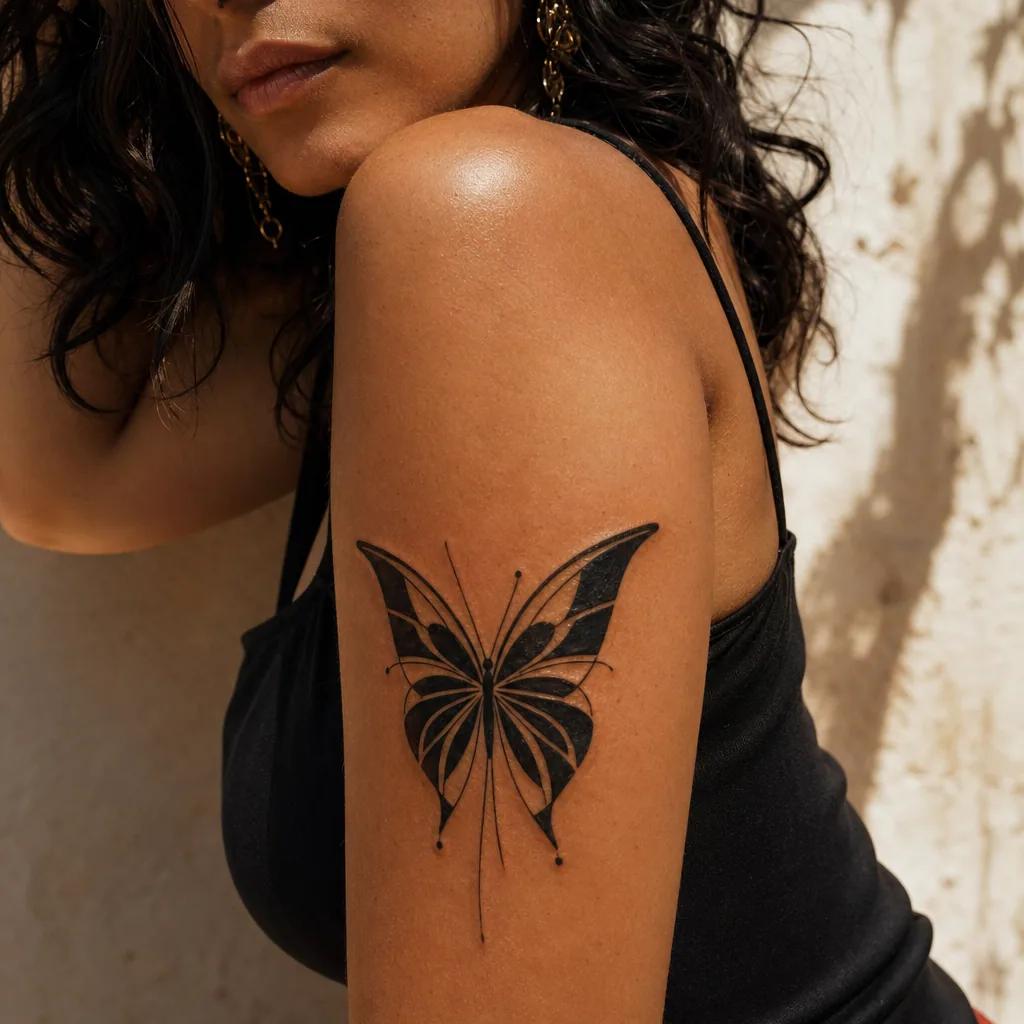 Covering
Designs generated with TryTattoo. A tattoo artist will adapt the design to your existing tattoo.
Add a photo of your tattoo
That's all you have to do. The AI instantly offers two directions: your tattoo enhanced and a full cover-up.
Cover-up: is it possible for your tattoo?
A cover-up means tattooing a new design over the old one so that it becomes invisible. The physics are simple: the ink is in your skin, you can't remove it with more ink, you can only mask it. Hence the golden rule every tattoo artist will explain to you:
The new tattoo must be larger and darker than the old one. A light or thin design will never hide a black line underneath, it will let the old design show through like a shadow.
What covers easily: thin, light, time-faded tattoos, small designs, grey or colored lines that aren't too dense.
What is harder: very dense solid black, big saturated tribals, recent and very dark tattoos. Not impossible, but it calls for either an even darker design, or laser lightening beforehand (see below). If you're unsure about your case, the easiest thing is to generate a few cover-up ideas suited to your situation and see what works visually over your design.
The real cover-up blockers (and how TryTattoo solves them)
A cover-up isn't just a matter of the artist's technique. People who want to cover a tattoo almost all hit the same problems, and that's exactly where [TryTattoo](/studio) helps you concretely:
"I don't know what could cover my tattoo." This is blocker number one. You look at your old design and you can't picture anything that would work on top of it. In seconds, TryTattoo generates design ideas suited to a cover-up (dense, dark, organic) that you wouldn't have thought of on your own.
"I'm scared to go through with it without knowing the result." That's normal: a cover-up is often larger and permanent. Before paying for a big piece, you can preview the design on your skin and decide whether you like it, calmly at home.
"I show up at the artist's with no clear idea." The result: appointments that drag on, a fuzzy brief, sometimes a result that misses what you wanted. Arriving with a concrete preview, your artist immediately understands your direction and the project moves along much faster.
The idea isn't to replace your tattoo artist, but to arrive prepared and reassured. The final choice of a workable design stays theirs, but you're no longer starting from a blank page.
The designs that work best for a cover-up
Some subjects are natural allies of the cover-up because they're dense, dark, or easy to shape to absorb the old outline:
- Flowers and floral designs (roses, peonies, foliage): dense, organic, they hug any shape and cover very well. See the [meaning of flower tattoos](/guide/flower-tattoo-meaning)
- High-contrast animals: [snake](/guide/snake-tattoo-meaning), wolf, panther, whose shading absorbs the old design
- Blackwork and neo-tribal: large, controlled areas of solid black cover almost anything, ideal over a very dark old tattoo
- Mandalas and dense geometric patterns: the repetition of detail drowns out the old outline
- Butterfly and wings: wide, symmetrical shapes that camouflage a small old design well. See the [meaning of butterfly tattoos](/guide/butterfly-tattoo-meaning)
- Watercolor over a dark base: color added over a black framework gives volume and depth
Conversely, forget thin, minimalist or fine-line designs for a cover-up: they cover nothing.
Cover-up or laser removal?
They aren't enemies, they often work together. The laser breaks up the ink to lighten or erase it; the cover-up covers it. Three scenarios:
Direct cover-up: your old tattoo is light, thin or faded. A good artist covers it in one or two sessions, no laser. The most common case.
Laser lightening then cover-up: your tattoo is too dark or too dense to be hidden directly. 2 to 4 laser sessions fade it just enough to give the new design more freedom. You don't erase it completely, you lighten it. This is the best option for tricky cases.
Full removal: you want no tattoo at all in that spot. That's laser only, longer and more expensive. We cover it in detail in the [tattoo removal](/guide/tattoo-removal) guide.
When in doubt, a cover-up specialist will tell you whether they can work directly or whether it's better to do a bit of laser first.
Cover-up or laser: which one for you?
Two opposite logics depending on whether you want to keep a tattoo in that spot or nothing at all.
Cover-up
Pros
- You walk out with a tattoo you love
- Often 1 to 2 sessions are enough
- Cheaper than full laser removal
- Immediate and permanent result
Cons
- The new design must be larger and darker
- Design choice constrained by the old tattoo
- Very dark tattoos need laser beforehand
Full laser removal
Pros
- Clean skin, no tattoo left
- Total freedom if you re-tattoo afterward
- Ideal for visible areas you want bare
Cons
- Long: 5 to 12 sessions spaced 6-8 weeks apart
- More expensive overall
- Sometimes imperfect on certain inks
Your cover-up project, step by step
Total time: 2 to 8 weeks depending on possible laser + 1 to 3 tattoo sessions
- 01
1. Identify what you want to hide
Take a sharp photo of your current tattoo in bright light. Note its size, its density (light or very dark?) and the area. These three details determine what's possible.
- 02
2. Generate cover-up ideas
With TryTattoo, describe the vibe you want (floral, animal, blackwork...) and generate several dense design directions suited to a cover-up. In a few minutes you explore what you like, with no commitment.
- 03
3. Preview it on your skin
Try your favorite designs in a realistic preview to judge the size, placement and look. This is the step that removes the fear of "what if I don't like it".
- 04
4. Consult a cover-up specialist
Show them your photo plus your previews. They will tell you whether it's doable directly or whether it needs laser lightening first, and adapt the design to your old tattoo.
- 05
5. The session or sessions
A cover-up often takes longer than a fresh tattoo (you have to pack in ink to cover). Sometimes plan for 2 sessions. Look into the [price](/guide/tattoo-cost), usually higher than a standard tattoo of the same size.
- 06
6. The healing
A cover-up is a big fresh tattoo: take its care seriously. Follow the [day-by-day aftercare protocol](/guide/tattoo-aftercare) and choose a [good healing product](/guide/tattoo-aftercare-products) to protect the result.
Estimate the price of your cover-up
A cover-up usually costs more than a fresh tattoo of the same size (more work, larger design). Here is a base range; add any laser lightening on top. Upload the photo of your current tattoo for a tailored estimate.
See your tattoo before the appointment
Describe what you want to hide, let TryTattoo suggest designs that cover, and show up prepared at your artist's.
Preview your cover-upFrequently asked questions
01Can you cover a black, dark tattoo?
+
Can you cover a black, dark tattoo?
Yes, but it's the most technical case. You need either a new design that's even darker and denser (blackwork, big solid fills), or to **lighten the old one with laser** over 2 to 4 sessions to give the artist more freedom. A light design will never be enough to hide dense black: it would let the old outline show through. A cover-up specialist will tell you which path is the most realistic for your case.
02Can you cover a name or a date?
+
Can you cover a name or a date?
Yes, and it's one of the most common requests (an ex's name, a date that no longer means anything). Since text is usually thin and linear, it covers rather well with a dense organic design: flowers, foliage, an animal. The difficulty mostly depends on the **size and thickness** of the letters, not on the fact that it's text. Generate a few design ideas that hug the shape of the lettering to see what works.
03How much does a cover-up cost?
+
How much does a cover-up cost?
Generally **more expensive than a fresh tattoo** of the same size, because it takes more work (packing in ink to cover, adapting the design to the old one). Expect the price of a piece all the larger since a cover-up often means going bigger. If laser lightening is needed, add its cost. Estimate the base budget in our [how much a tattoo costs](/guide/tattoo-cost) guide.
04How many sessions does a cover-up take?
+
How many sessions does a cover-up take?
Often **1 to 2 sessions** for the tattoo itself, sometimes just one if the piece isn't too large. If your old tattoo needs laser lightening first, add **2 to 4 laser sessions** spaced 6 to 8 weeks apart before starting the cover-up. The artist gives you the number of sessions after seeing your current design.
05Can TryTattoo really help me with a cover-up?
+
Can TryTattoo really help me with a cover-up?
It helps with the two things that block people most: **finding ideas** for designs suited to a cover-up (dense, dark, organic) and **previewing the result** on your skin before committing. You arrive at your artist's with a clear direction instead of starting from a blank page. The artist remains essential to adapt the design to your old tattoo and to execute it, but you gain confidence and save time on the brief.
06Can you cover a very old, faded tattoo?
+
Can you cover a very old, faded tattoo?
That's actually the **easiest case**. Over time, the ink fades and disperses: an old faded blue-green tattoo often covers without laser, with a lot of design freedom. It's the ideal cover-up scenario. Preview several directions to make the most of that freedom and choose a design that truly reflects who you are today.
Go further
More guides and inspiration to feed your project.
Sources
- Feedback from cover-up specialist tattoo artists (France)
Author
The TryTattoo team
The studio behind the AI tattoo generator
TryTattoo helps people planning a tattoo project: AI design generation, on-skin preview, price estimation. Our guides rely on public sources, are illustrated with designs created with our own tool, and are reviewed before publishing.
More about TryTattoo →