Tattoo Guide/tattoo aftercare
How do you take care of a new tattoo after the session?
Your tattoo is done and you walk out of the studio with a sheet of healing film and a thousand questions. Good news: perfect healing isn't complicated. It is simply **a strict 3-week routine** that nobody really took the time to explain to you. Here is the complete day-by-day protocol, validated by tattoo artists and dermatologists.
6 min read · Updated Oct 2026
Before your appointment, preview your design with TryTattoo. You show up better prepared and your artist spends less time on the brief.
Preview your design before the sessionQuick answer
The first 3 weeks decide how your tattoo heals. Keep the healing film (Saniderm, Dermalize) on for 3-5 days, then wash 2-3 times a day with lukewarm water and a mild, fragrance-free soap, and apply a thin layer of healing ointment (Bepanthen, Cicaplast). Strictly off-limits for 3 weeks: pools, baths, saunas, direct sun, tight clothing rubbing the area, and picking at scabs. Expect 2-3 weeks of visible healing and 2-3 months for deep stabilization.
Key takeaways
- 01Saniderm/Dermalize healing film: keep it on 3-5 days without removing it
- 02After removing the film: wash 2-3x a day with lukewarm water and mild, fragrance-free soap
- 03A thin layer of ointment like Bepanthen or Cicaplast for 2-3 weeks
- 04Strictly off-limits for 3 weeks: pools, baths, saunas, direct sun, scratching
- 05SPF 50 is mandatory for life on the area, sun exposure is what ages a tattoo the most
Four tattoos, four levels of specific care
TryTattoo designsNot every tattoo needs exactly the same care. Size, style and placement all affect how long and how intense the healing is. Here are four typical cases.
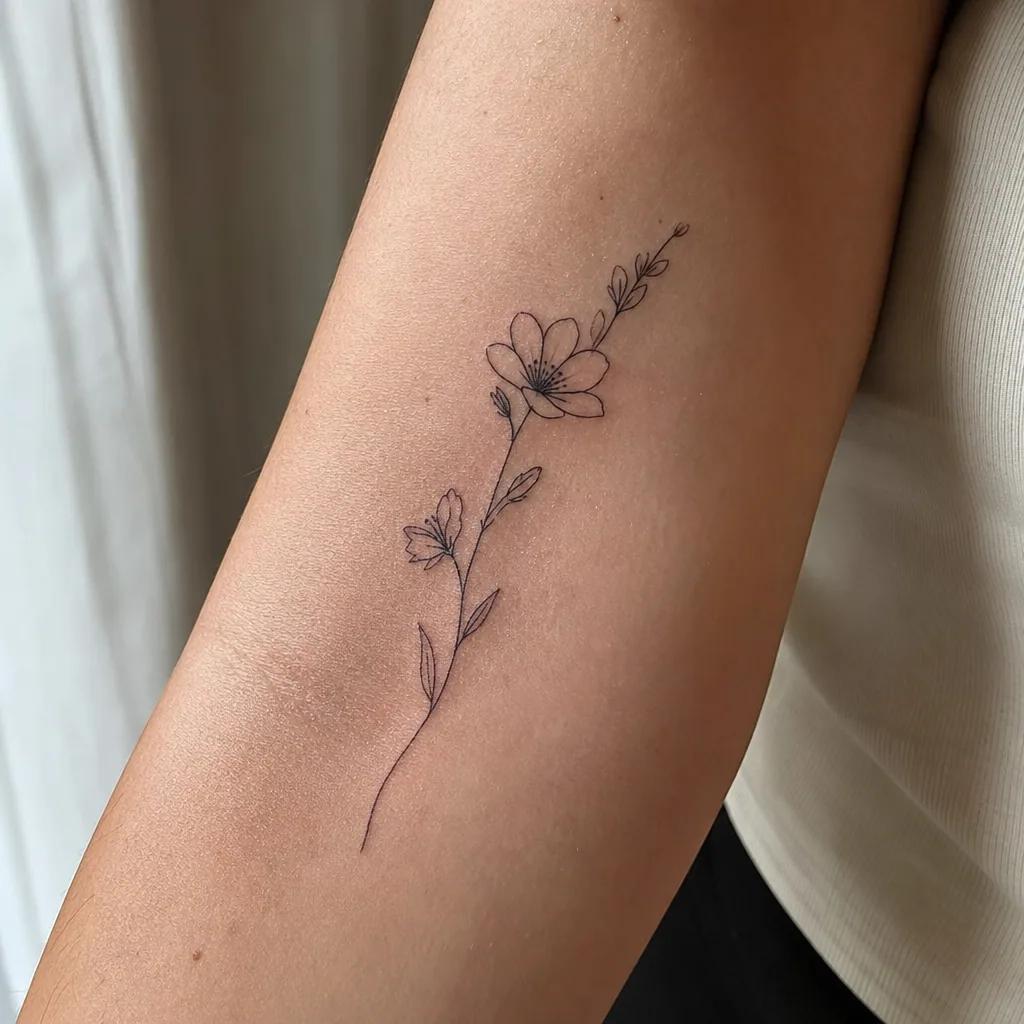 Fast
Fast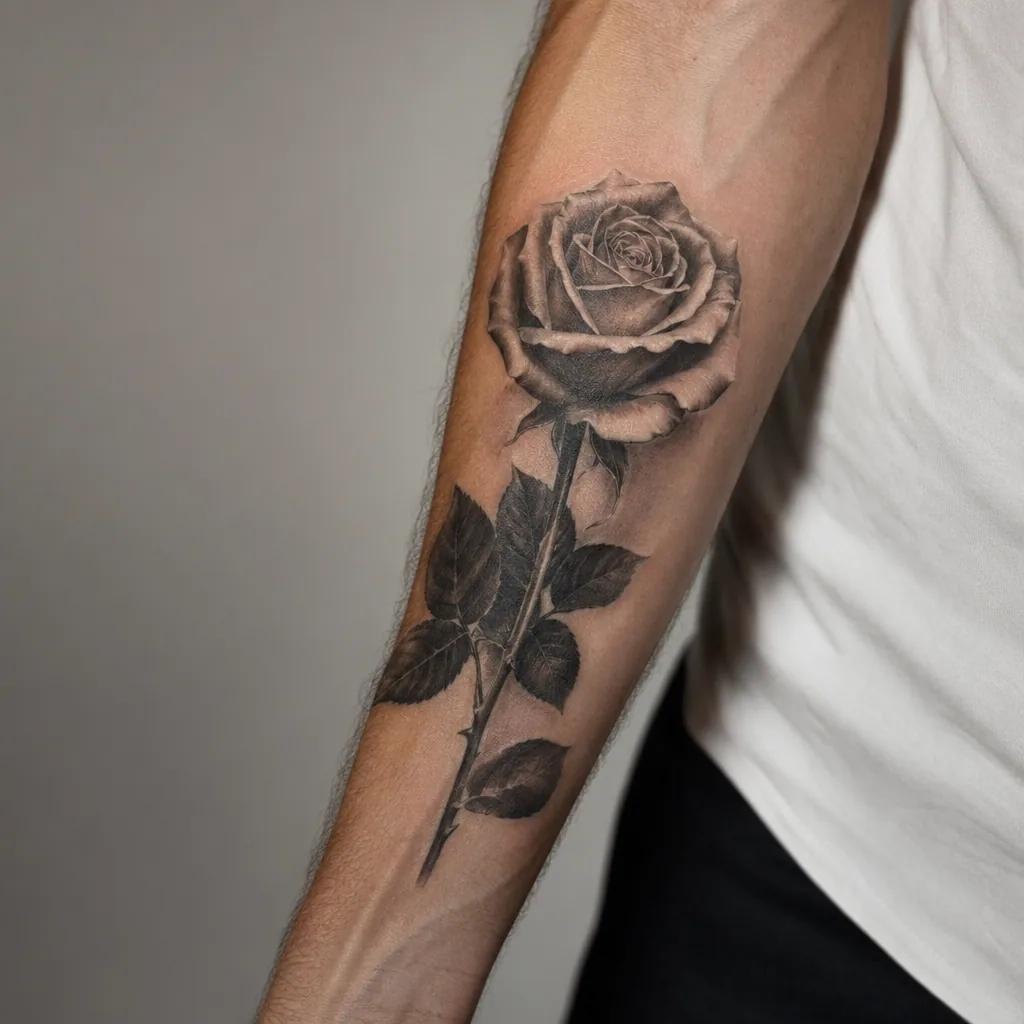 Standard
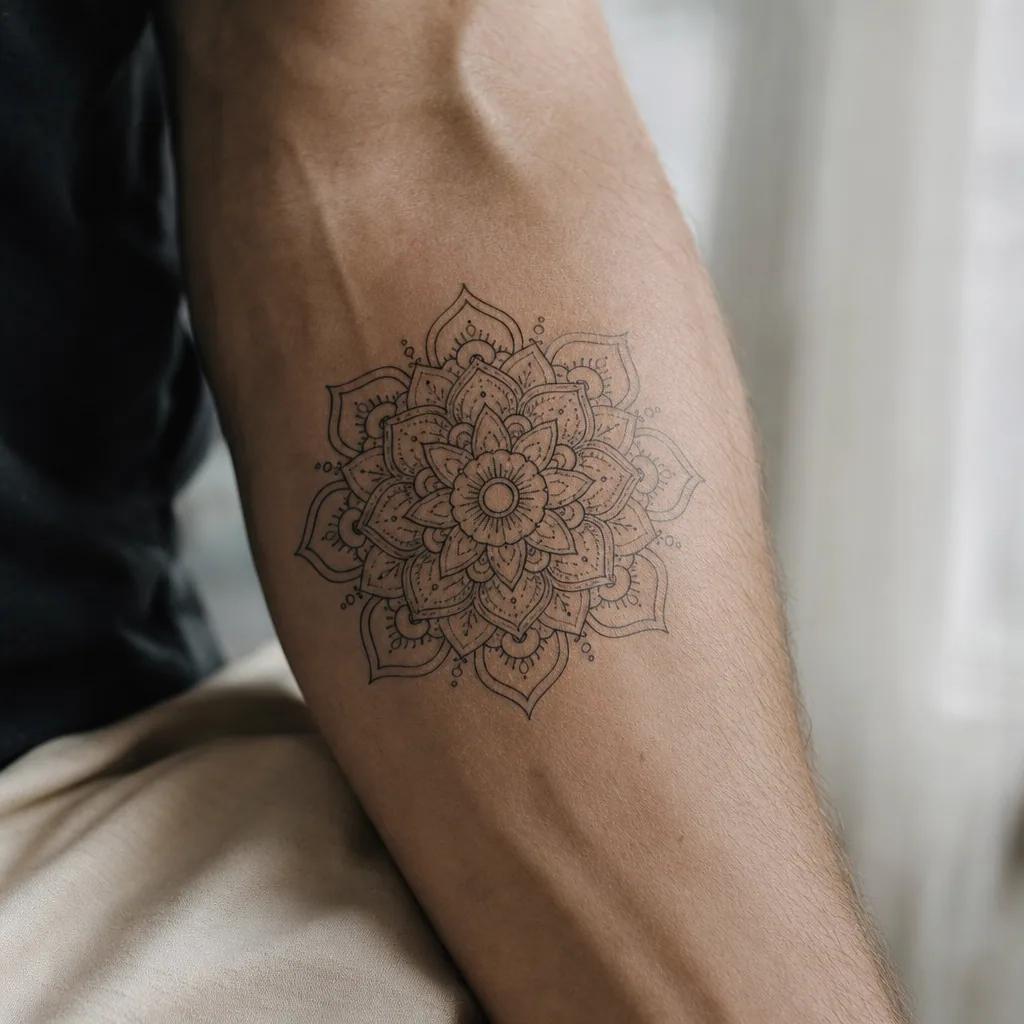 Extended
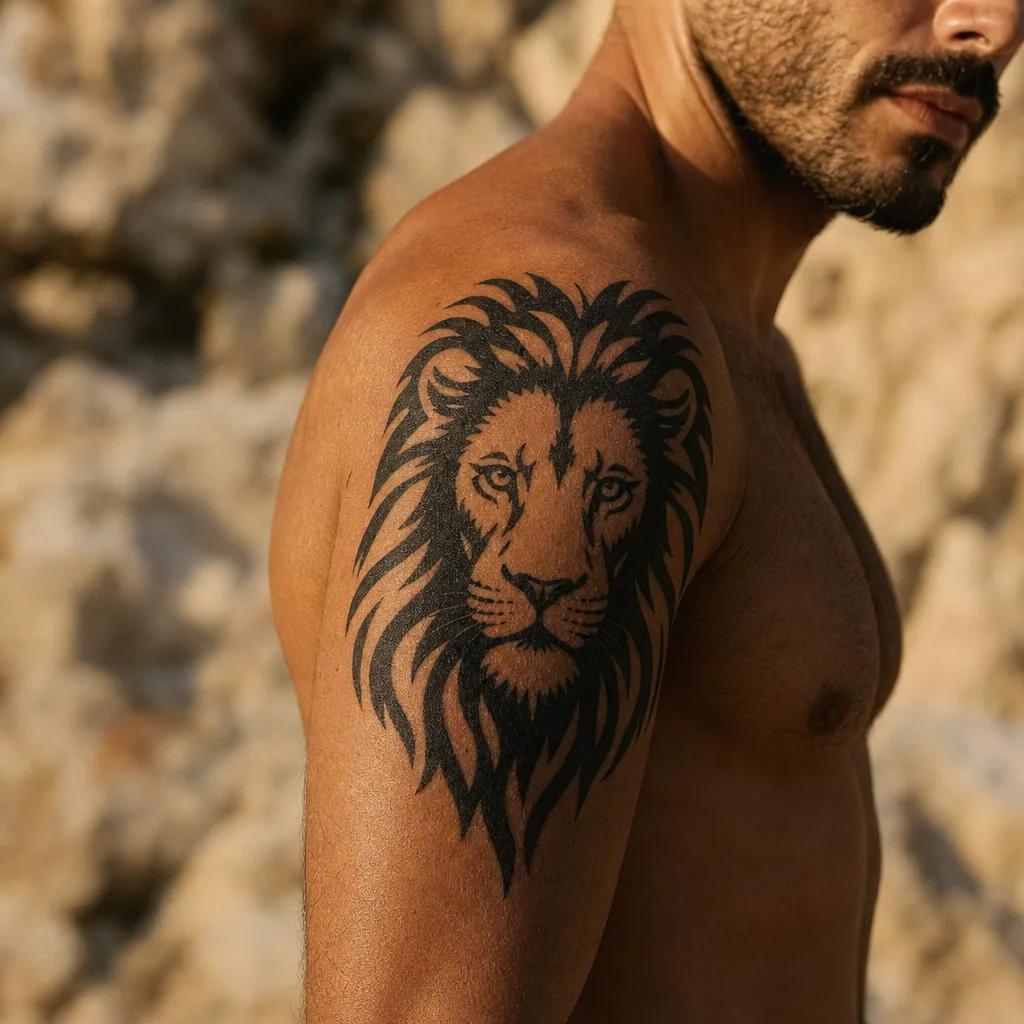 Intensive
Designs generated with TryTattoo. Your tattoo artist will give you a protocol adapted to your specific tattoo.
Why the first 3 weeks matter so much
A tattoo is technically an open wound where ink has been deliberately trapped about 1 mm deep in the dermis. Three things happen at the same time while it heals:
1. The skin closes up (days 1-7). The epidermis rebuilds a protective layer over the ink. This is the phase when the risk of infection peaks.
2. Scabs form, then fall off (days 7-21). Your body clears out dried blood, plasma and a bit of excess ink. If you scratch, you rip out ink along with the scabs, leaving permanent patchy spots.
3. The skin rebuilds itself in depth (weeks 3-12). The dermis reorganizes around the ink. This is what determines how stable the tattoo stays over the next 20 years.
Poor aftercare during this period can lead to dull colors, blurry lines, patches where the ink didn't take, infections (1-3% of cases), and hypertrophic scarring. Perfect healing accounts for half of the final quality of your tattoo.
What is strictly off-limits for 3 weeks
Here is the red list. Every violation can compromise the healing and the final look of your tattoo:
- Swimming pools (harsh chlorine plus bacteria), at least 3 weeks after the session
- Baths, hot tubs, saunas (prolonged soaking macerates the skin and softens scabs), 3 weeks
- Beach and ocean (salt, sun and abrasive sand), 3-4 weeks
- Direct sun on the area, 4 weeks minimum, then SPF 50 for life
- Picking at scabs (even when the itching is unbearable), for the entire peeling phase
- Tight clothing over the area (friction damages the scabs), 2 weeks
- Intense workouts involving the tattooed area (sweat plus friction), 1 week
- Shaving or hair removal on the area, 4 weeks
- Scented creams, scrubs, harsh soaps, for the entire visible healing phase
- Pets licking the area (bacteria), for the entire healing phase
The products that actually work (and the ones to avoid)
The market is full of overpriced "tattoo creams", but in practice dermatologists recommend 3 simple products available at any pharmacy for around 5-15 € (if you are torn between a pharmacy cream and an all-in-one aftercare kit, we compare everything in our guide [which tattoo aftercare products to choose](/guide/tattoo-aftercare-products)):
Bepanthen ointment 5% (provitamin B5), the gold standard. Thick texture, slows down scab shedding, hydrates deeply. You can use it as soon as the healing film comes off. A 30 g tube costs around 5-8 € and lasts 2-3 weeks for a medium tattoo.
Cicaplast Baume B5 (La Roche-Posay), a more modern alternative with a lighter texture that spreads more easily. Same active ingredient as Bepanthen. A 40 g tube costs around 8-12 €.
Aquaphor by Eucerin, hugely popular in the US and widely available elsewhere. Ointment texture, long-lasting hydration. A 50 g tube costs around 10-15 €.
Absolutely avoid: scented creams (a guaranteed rash), Nivea, Dove or regular body lotions (formulas not suited to open skin), coconut oil directly on a fresh wound (bacterial risk), pure petroleum jelly (smothers the healing), and antibiotic ointments without a prescription. Rule of thumb: the less a product is hyped as a "miracle", the more likely it is to be appropriate.
The day-by-day protocol (3 weeks)
Total time: 21 days (visible healing) + 2-3 months (deep stabilization)
- 01
Days 1-3: keep the healing film on
Your artist applies an occlusive film (Saniderm, Dermalize, Second Skin) at the end of the session. Keep it on for 3-5 days without removing it, even in the shower. You will see plasma and a bit of ink pooling under the film, that's normal.
- 02
Day 3-5: remove the film gently
Take it off under a lukewarm shower, pulling slowly and flat against the skin (not upward). Gently wash the area with lukewarm water and a mild, fragrance-free soap. Pat dry with a clean paper towel (not a bath towel, which can harbor bacteria).
- 03
Days 5-10: washing and ointment routine
Wash 2-3 times a day with lukewarm water and mild soap. Pat dry. Apply a thin layer of Bepanthen, Cicaplast or Aquaphor. Thin, not thick (the skin needs to breathe). This is the phase when scabs start to form.
- 04
Days 10-14: the peeling phase
Scabs fall off on their own and the skin peels (like a sunburn). Itching is frequent. DO NOT SCRATCH. Pat the area if it gets truly unbearable. Keep up the twice-daily routine of washing plus a thin layer of ointment.
- 05
Days 14-21: the end of visible healing
The skin becomes smooth again and the colors look a little pale. That's normal. They will brighten up around the 2-3 month mark, once the final epidermis has formed its new transparent layer over the ink.
- 06
Weeks 3-12: deep stabilization
The dermis heals internally. Daily ointment is no longer essential, but keeping your skin generally hydrated still helps. At this stage you can go back to swimming and sun exposure with SPF 50.
- 07
Long term: SPF for life plus regular moisturizing
SPF 50 sunscreen whenever the area is exposed, all year round: it is the number one factor in [tattoo aging](/guide/tattoos-that-age-well), and we cover [sun exposure](/guide/tattoos-and-sun) in a dedicated guide. Moisturize the skin daily, especially in winter. Around 4-8 weeks after the session, assess whether a touch-up is needed (often free with your artist).
Real examples
Fine-line flower (fast healing)
Thin lines, little dense ink. Visible healing in 10-14 days. Basic care, light peeling, ointment for 2 weeks.
Heals 10-14 days
Realistic rose (standard healing)
Medium shading plus details. Heals in 2-3 weeks with normal peeling. Daily ointment, keep a close eye on the linework.
Heals 14-21 days
Dotwork mandala (dense coverage)
High dot density over a large area. Heals in about 3 weeks, extend the ointment by 1 week to help the most heavily inked zones.
Heals 18-25 days
Blackwork lion (intense peeling)
Very dense black fill means heavy peeling between days 10 and 20. Strong itching. NEVER scratch, apply ointment to calm it down.
Heals 18-25 days
See your tattoo before the appointment
A preview also helps you anticipate the area you will need to protect, useful for planning the healing weeks.
Preview your design before the sessionFrequently asked questions
01Should you sleep with or without a bandage the first night?
+
Should you sleep with or without a bandage the first night?
If your artist applied a **modern healing film** (Saniderm, Dermalize, Second Skin): sleep with it on, it holds up perfectly overnight. If it's a **classic wrap** (medical cling film or a gauze pad): remove it after 2-4 hours and let the tattoo air out overnight, on clean cotton sheets only (no synthetic silk that sticks). Avoid sleeping directly on the tattoo for the first week. Fresh ink can stain your bedding, and pressure compromises the early healing.
02Why does my tattoo look dull after 1 week?
+
Why does my tattoo look dull after 1 week?
It's completely normal and **very common**. The skin forms a thin layer of new epidermis over the ink, and that layer is slightly opaque and milky. Colors **look muted** for 4-8 weeks, until that new layer turns transparent. By 2-3 months after the session, your tattoo regains its true intensity. NEVER judge the quality of the work before the 3-month mark.
03Can you exercise while a tattoo is healing?
+
Can you exercise while a tattoo is healing?
Yes, for activities that don't strain the tattooed area (forearm tattoo means no push-ups, but running is fine). Ease back in after day 3. **Avoid the gym and the pool for 2 weeks** (bacteria plus heavy sweating). Light, normal sweating isn't a problem. What you need to avoid is **friction** and **prolonged moisture**. Always wash the area after exercise and apply a thin layer of ointment.
04Is it normal for the itching to be this intense?
+
Is it normal for the itching to be this intense?
Yes, it's probably the most unpleasant sensation of the entire healing process. It peaks between days 7 and 14, when scabs form and the skin starts to peel. **NEVER SCRATCH**, you would rip out ink along with the scabs and create permanent patchy spots. What helps: **pat** the area (never scratch), apply ointment to soothe it, take an antihistamine tablet (cetirizine, for example) if it's truly unbearable, or hold an ice pack wrapped in a clean cloth against it.
05How long before you can expose a tattoo to the sun?
+
How long before you can expose a tattoo to the sun?
**Direct sun**: off-limits for 4 weeks after the session (UV rays attack fresh ink). **At the beach, from week 4**: apply SPF 50 every 2 hours. **For life**: SPF 50 whenever the area is exposed, even in winter and even on cloudy days (UVA passes through clouds and car windows). Sun exposure is the number one factor in tattoo aging. An unprotected tattoo loses 30-50% of its intensity over 10 years, versus 5-10% with consistent protection.
06When should you plan the post-healing touch-up?
+
When should you plan the post-healing touch-up?
Wait **4-8 weeks** after the session to assess whether a touch-up is needed. By then you can clearly see if some areas took the ink less well (broken lines, fills with white gaps, pale patches). The touch-up is **usually free** with most reputable artists within the first 3 months after the session, it's an industry standard. Book proactively if you see visible gaps at the 1-month mark. No need to wait until it's "visible from across the room", a good artist prefers to fix things early.
Go further
More guides and inspiration to feed your project.

Author
The TryTattoo team
The studio behind the AI tattoo generator
TryTattoo helps people planning a tattoo project: AI design generation, on-skin preview, price estimation. Our guides rely on public sources, are illustrated with designs created with our own tool, and are reviewed before publishing.
More about TryTattoo →