Tattoo Guide/tattoos and sun
Tattoos and sun: how do you protect your skin and keep a tattoo vibrant?
Summer coming up, a beach vacation, or a tattoo slowly losing its shine: the relationship between tattoos and the sun is more complex than it looks. Here are the real rules for preserving your tattoo's vibrancy without giving up the sun.
5 min read · Updated Oct 2026
A tattoo protected from the sun stays vibrant 20 years longer.
Visualize your tattoo before the sunQuick answer
To keep a tattoo vibrant, protect it from the sun with a mineral SPF 50+ all year round. A fresh tattoo (under 2 months old) must avoid direct sun and swimming entirely while it heals. Sun exposure is the main cause of tattoo aging: it fades colors, browns black ink and accelerates the loss of definition. Moderate exposure is perfectly fine as long as the protection is done right.
Key takeaways
- 01The sun is the main factor in tattoo aging
- 02Apply a mineral SPF 50 every day on the tattooed area, summer and winter
- 03A fresh tattoo (under 2 months) must avoid direct exposure entirely
- 04Colors (red, yellow, green) are the most sensitive to UV
- 05Reapply every 2 hours during prolonged exposure
Not all tattoos react to the sun the same way
TryTattoo designsBright colors, saturated black, fine line: every style has its own UV sensitivity.
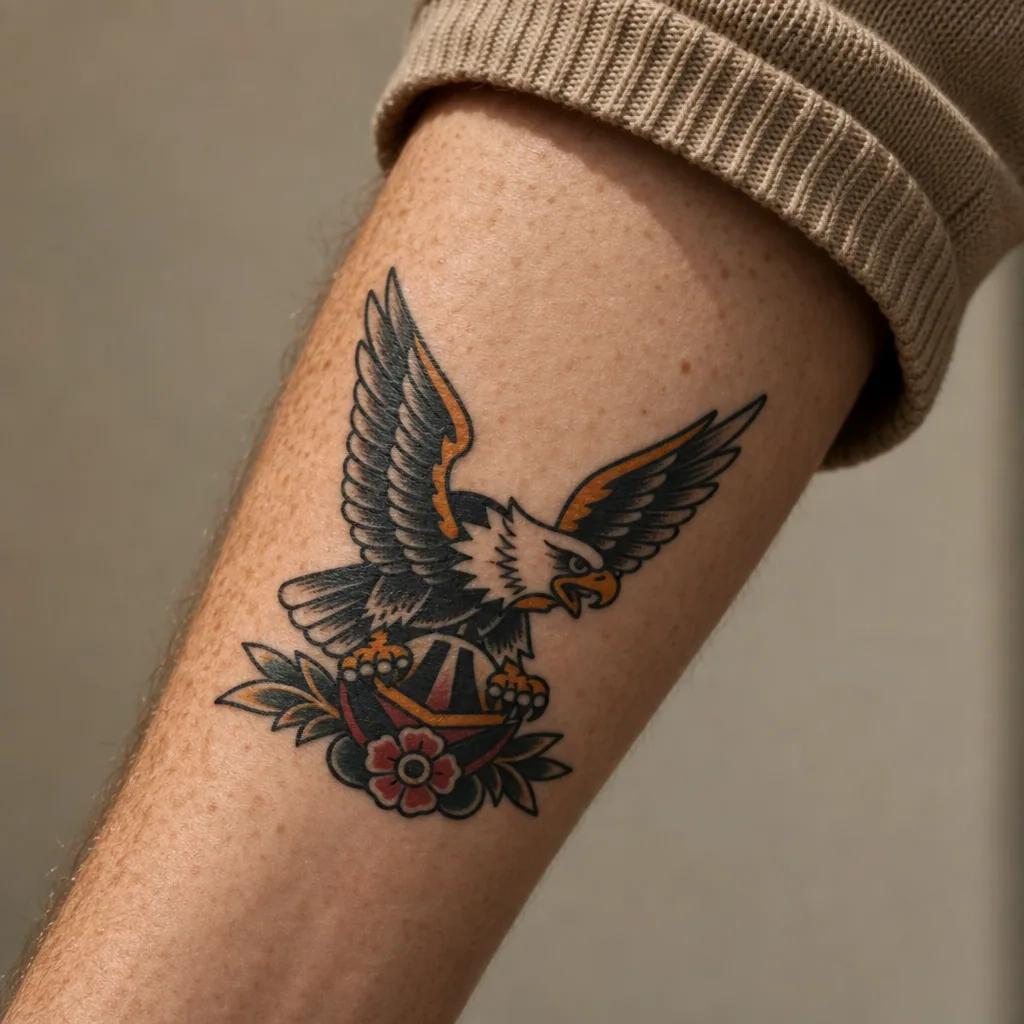 Very sensitive
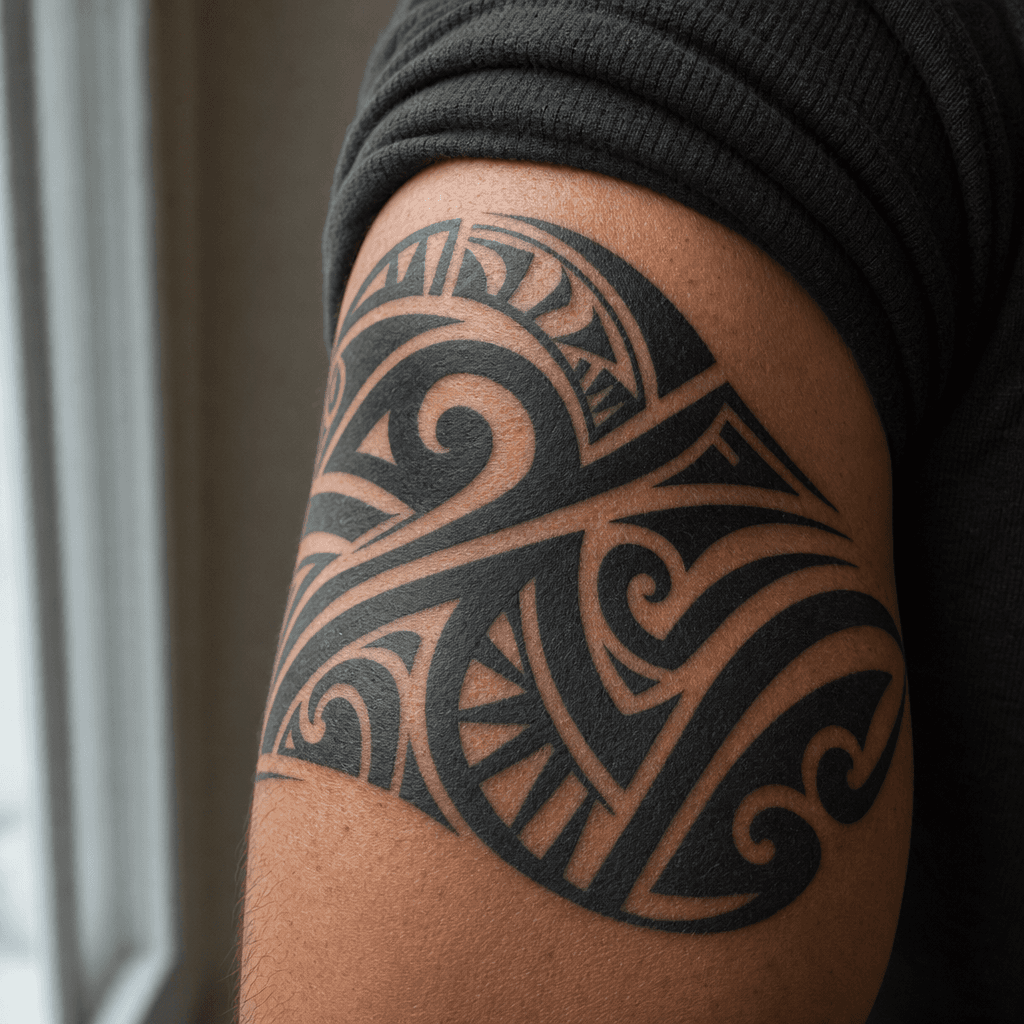 Fairly resistant
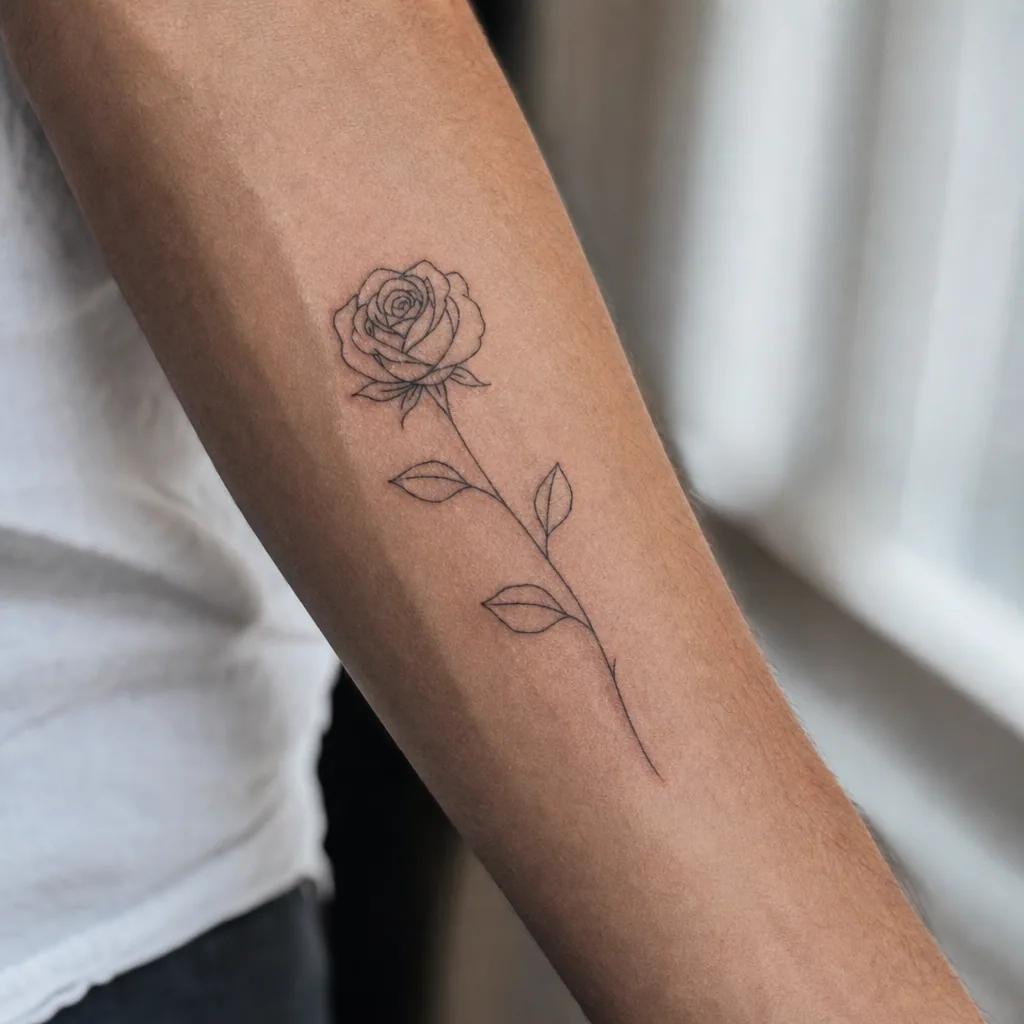 Sensitive
Why the sun damages tattoos
UV rays penetrate down into the dermis, exactly where tattoo ink sits. The pigments absorb that UV and gradually break down: colors fade, black browns, and outlines fragment. A 2024 UC San Diego study estimates that an unprotected tattoo loses 30 to 40% of its vibrancy over 10 years, versus only 5 to 10% for a protected one. The most sensitive colors are yellow, orange and red, which strongly absorb UV. Black resists better but browns over time. Blue and green generally hold up well under proper SPF.
Fresh tattoos and sun: the strict 2-month rule
During the first 2 months after getting tattooed, your skin is still deep in the healing process. Direct sun exposure at this stage can trigger an infection, cause blistering, accelerate ink loss, and leave permanent hyperpigmentation around the design. No direct exposure is tolerated during this period, even briefly. If you have to be out in the sun, fully cover the tattoo with opaque clothing (not sunscreen). Sunscreen on a fresh tattoo is discouraged for the first 3 weeks: its ingredients can irritate healing skin.
Which sunscreens should you choose for a tattoo?
Prefer mineral filters (zinc oxide, titanium dioxide) over chemical filters for 3 reasons: they stay on the surface without penetrating the dermis, they create a physical UV barrier, and they are better tolerated by sensitive skin. SPF 50+ minimum on tattoos, summer and winter. Trusted, widely available brands include Avène, La Roche-Posay, Bioderma, Eucerin and Vichy. For tropical vacations, pick a sunscreen that is water-resistant and reef-friendly (no oxybenzone or octinoxate, which destroy coral). Avoid tanning oils: their SPF is far too low and their greasy formulas accelerate fading.
Tattoos and swimming: the protection rules
Pools (chlorine) and the ocean (salt) are harsh environments for tattooed skin. Fresh tattoo: swimming is strictly off-limits for 4 to 6 weeks. Healed tattoo: swimming is fine, but apply SPF 50 thirty minutes before getting in the water and reapply after every swim. Chlorinated pools can slightly fade heavily saturated tattoos over the long run: limit extended soaking. The ocean is gentler than a pool if you rinse with fresh water afterward. Avoid saunas and steam rooms for 1 month after getting tattooed: extreme heat and sweating disrupt the healing.
How to fix a tattoo already faded by the sun
If your tattoo has already lost its vibrancy because of the sun, the fix is a touch-up with your original artist. A touch-up session lasts 30 to 60 minutes and typically costs around 50 to 150 € (free at some studios for recent tattoos). The artist goes back over the faded areas and re-densifies the colors. For very old tattoos (over 10 years) or heavily degraded ones, a partial cover-up may be needed. Before the touch-up, moisturize the area intensively for 2 weeks to prep the skin.
Protecting your tattoo from the sun: the 6-step routine
Total time: 3 minutes a day, for the life of your tattoo
- 01
Identify the exposed tattooed areas
Before every sunny outing, list the tattooed areas that will be exposed: forearm, full arm, legs, back, neck, hands. These areas are your protection priority.
- 02
Apply a mineral SPF 50 thirty minutes before going out
Prefer mineral filters (zinc oxide, titanium dioxide) over chemical ones. Apply a generous layer, without forgetting the edges of the tattoo. A thin layer does not protect properly.
- 03
Reapply every 2 hours
SPF effectiveness drops after 2 hours, even without sweating or swimming. If you swim, reapply immediately after every dip, even with a water-resistant formula.
- 04
Stay out of peak-UV hours
Avoid direct exposure between noon and 4 pm, when UV peaks. Seek shade or wear a light garment that covers the tattoo during those hours.
- 05
For long exposure, add UPF clothing
UV-protective clothing (UPF 50+) is essential for long beach days, hikes or pool days. The fabric must fully cover the tattoo.
- 06
After exposure, moisturize intensively
A rich moisturizer at night keeps tattooed skin supple and strengthens its barrier against future UV damage. The evening routine matters as much as the morning protection.
Real examples
Avène mineral SPF 50 sun care
Pure mineral filters, oxybenzone-free, water-resistant. A dermatologist favorite for tattooed skin.
14-18 €
La Roche-Posay Anthelios Invisible Fluid SPF 50+
Well-tolerated hybrid filters, invisible finish with no white cast. Ideal for the face and discreet tattooed areas.
17-22 €
UPF 50+ long-sleeve garment
Technical anti-UV shirt, essential for the beach, hiking or any extended time in the sun with a fresh or older tattoo.
25-50 €
Bepanthen Tattoo moisturizing cream
Tattoo-specific cream to apply at night to keep the skin supple and extend the vibrancy of the pigments.
8-12 €
Touch-up for a sun-faded color tattoo
A short session with your original artist to go back over the areas faded by the sun. Often free within the first year.
0-150 €
Partial cover-up for a heavily degraded tattoo
For very old, completely faded tattoos. The artist redraws the piece, working the still-visible outlines into the new design.
200-800 €
See your tattoo before the appointment
Before getting tattooed in summer, think about the exposed area and the healing timeline.
Visualize your tattoo before the sunFrequently asked questions
01Can you go to the beach with a healed tattoo?
+
Can you go to the beach with a healed tattoo?
Yes, no problem, as long as you protect the area properly. Apply a mineral SPF 50 thirty minutes before exposure, reapply every 2 hours and after every swim. Rinse with fresh water after the ocean or the pool. Avoid sitting in full sun between noon and 4 pm. Moisturize the area at night. With these precautions, your vacation will not damage your tattoo.
02What SPF should you use for a tattoo under tropical sun?
+
What SPF should you use for a tattoo under tropical sun?
In the tropics, the UV index climbs to 11-14, versus 7-9 in most temperate climates. Use a mineral SPF 50+ that is water-resistant and reef-friendly (no oxybenzone or octinoxate), without exception. Reapply every hour rather than every 2 hours. Combine it with UPF 50+ clothing for long exposure. Avoid direct sun between 11 am and 4 pm. Drink plenty of water to keep your skin hydrated.
03How long after getting a tattoo can you expose it to the sun?
+
How long after getting a tattoo can you expose it to the sun?
At least 2 months for moderate exposure with SPF 50. During the first 4 weeks, no direct exposure is allowed at all, even briefly: the skin is deep in the healing process. Between weeks 4 and 8, you can have short exposure with a mineral SPF 50, covering up during peak hours. After 2 months, healing is advanced enough for normal exposure, always with protection.
04Are tanning oils dangerous for tattoos?
+
Are tanning oils dangerous for tattoos?
Not dangerous in the medical sense, but ineffective and bad for the artwork. Tanning oils typically offer an SPF of 4 to 15 at most, far too low to protect a tattoo. Their greasy formulas also accelerate pigment fading over the long term by enhancing UV penetration. Use a mineral SPF 50+ cream instead. If you want that golden glow, go for a self-tanner applied after sun protection rather than a tanning oil.
05Does the sun darken black tattoos?
+
Does the sun darken black tattoos?
Black resists the sun better than colors, but it still changes: it **browns** and the lines **fragment** over time if exposed without protection. An unprotected black tattoo can take on a brownish-blue or greenish tint after 10-15 years. Recent black tattoos (single-needle fine line) are particularly vulnerable because the lines are so thin. Year-round SPF 50 protection is therefore essential even for 100% black tattoos.
Go further
More guides and inspiration to feed your project.
Sources
- UC San Diego, 2024 study on UV degradation of tattoo pigments
- Avène, La Roche-Posay: mineral SPF 50 product documentation

Author
The TryTattoo team
The studio behind the AI tattoo generator
TryTattoo helps people planning a tattoo project: AI design generation, on-skin preview, price estimation. Our guides rely on public sources, are illustrated with designs created with our own tool, and are reviewed before publishing.
More about TryTattoo →